Running an e-commerce website? Watch out for Google shopping.

Apparently Google launched a Beta version of “Google Shopping” (Google Achats) in France last week. The application looks very promising and might change the online shopping experience. If you sell over the internet, you definitely should consider listing your products in Google Shopping. How you index your products is explained below the screenshots.
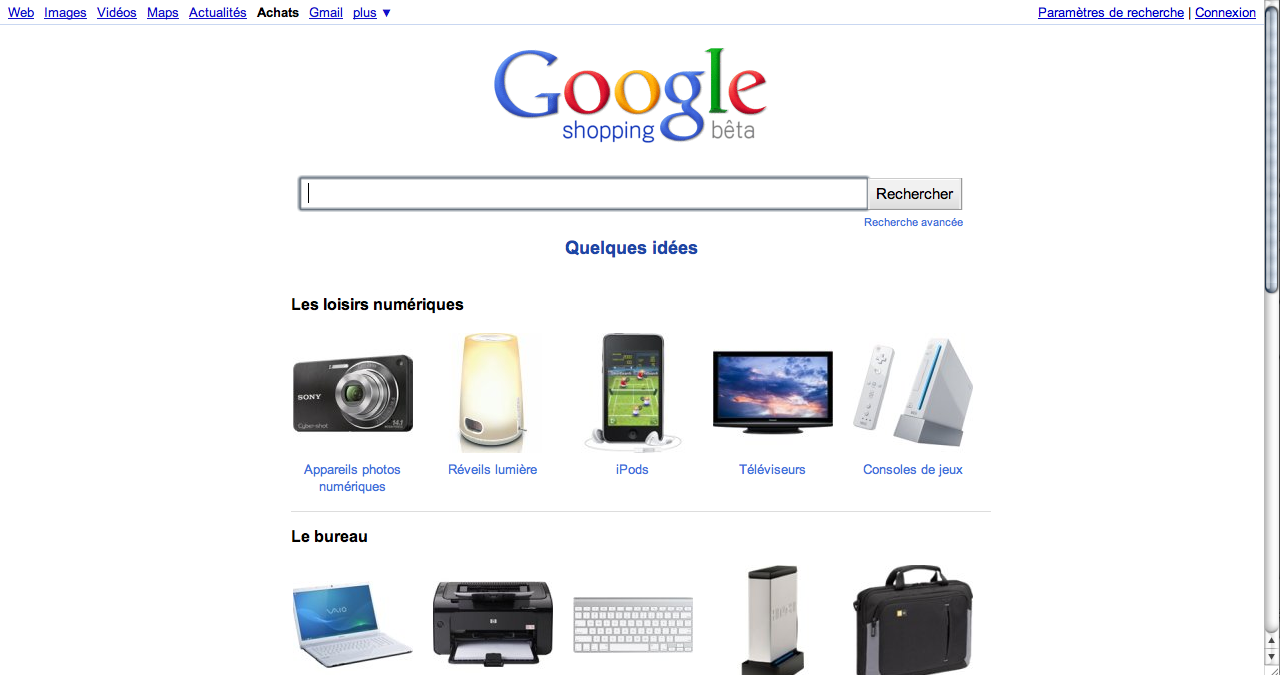
Google Shopping France - homepage

Google Shopping France - homepage

Google Shopping - Bèta in France : search for iMac

Google Shopping - Beta in France : search for iMac
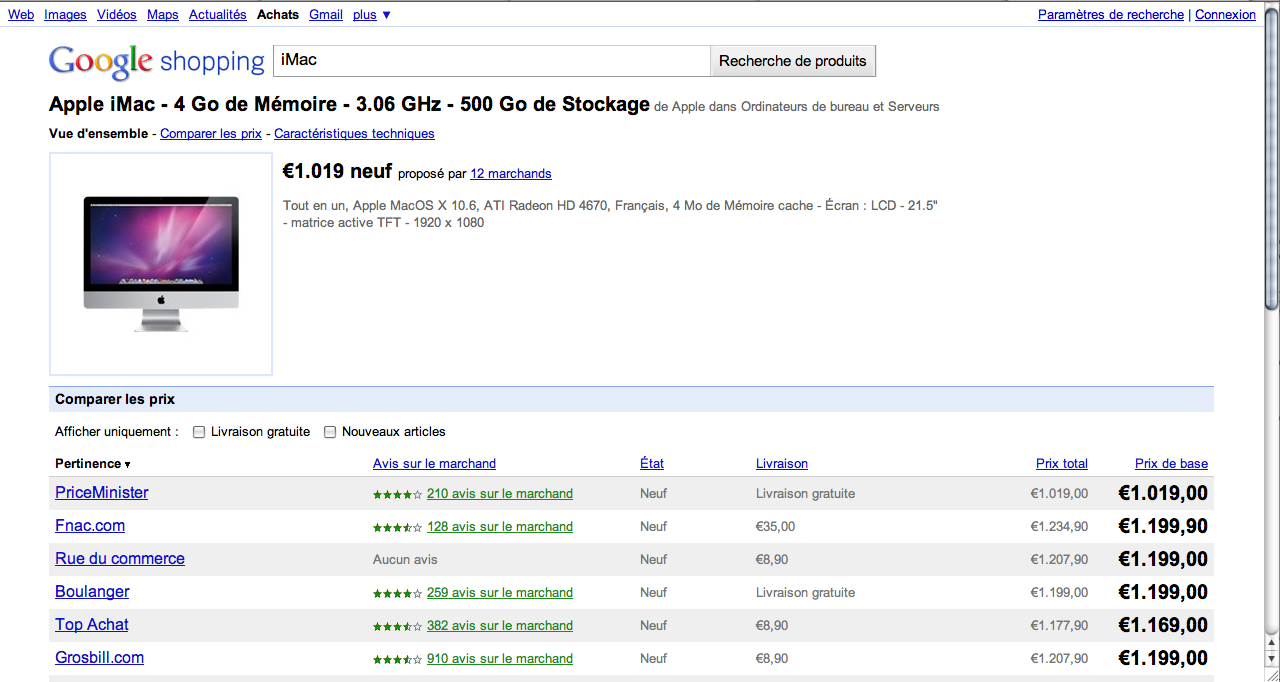
Google shopping : bèta in France - price comparison

Google shopping : beta in France - price comparison

Index your products through a feed in Google Merchant Center

In order to appear in the list, an e-commerce website or webshop needs to provide a feed of their products to the Google Merchant Center. Consequently Google indexes the data and makes them available for search and price comparison via a web interface on google.com (or in case via a country-specific url extension).

In addition, consumers are able to immediately buy the good if the e-commerce website supports Google Check-out.

Indexed enterprises in France that offer iMac on google.fr

Imagine you want to buy an iMac and want to know the perfect place and price for your purchase.
Imagine you’re a go-getter and will search for all places online where you can buy an iMac.
Imagine you accurately archive all information in a spreadsheet so to compare the offers.

How long would that take? How long does it take with Google Shopping?

Can you see the benefits already?

Companies that partner with Google within the “market of the search term ‘iMac’ on Google Shopping France” are listed below.

Just one more thing: online shopping is a global phenomenon

Isn’t it? Why roll out this service by country then?

BNP Paribas Fortis: from mobile web to mobile app.

BNP Paribas Fortis mobile banking

BNP Paribas Fortis - mobile banking

BNP Paribas Fortis - mobile banking

We believe the strategy is in compliance with what we (and most important literature) know about mobile web and mobile apps. Here’s a non-exhaustive list of important facts for mobile projects:

  • mobile web or mobile apps need to load quickly (even with 3G and UMTS).
  • the mobile web is not a mirror of the website
  • automatically present the mobile website when mobile devices is detected
  • the mobile web is used to find contact coördinates, product information and news
  • for mobile apps one needs to reflect on the different OS: iOS, BlackBerry, Symbian, Android, …

For more details on this particular subject, please go through the slide show below.

Google: a new phase in brand management techniques?

Google is without a doubt one of today’s global brands. What’s remarkable, it gained that position without deploying branding techniques previously known as effective. If one compares the manner by which the Google brand grew to the strategy used by brand institutes like P&G or Unilever, one might believe a new phase arrived.

1. Google & adverts

Marketing used to follow this logic: manufacture with the lowest cost and spend money on adverts. This will do the trick. Google (almost) used no adverts (as far as we know). They relied on “viral” and pr to build the brand. Funny aspect: ads are Google’s main source of revenue.

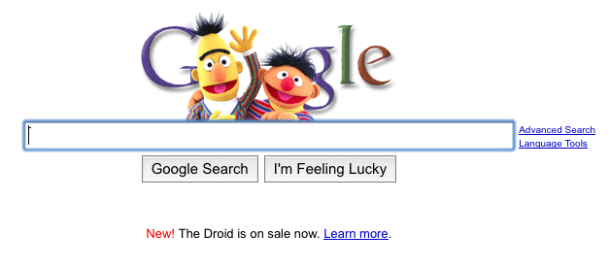
Google logo - bert&ernie style

Google logo - bert&ernie style

2. Branding: corporate design, corporate identity

It used to be important to have a consistent display of the corporate design / identity. To simplify: the logo has to look always and everywhere the same. Google plays with its logo – expressing change and hence its identity (?). Equally striking are the options to customize your homepage (e.g. by modifying the background). What’s more the corporation itself encourages users to personalize their homepage: have a look at the movie below.

3. Product extensions and sub-branding

Strategy deployed by the big brand institutes was in fact one of “sub-branding”. Every product was conceived as a separate brand. An element that could explain the power of the brand Google is the fact that nothing is in fact sub-branded. Google is actively creating product extensions that all become an part of the brand google (e.g.: Google Mail to Google Maps) to ensure that it can grow beyond search. Other corporations such as Unilever choose to build a brand for each product, ending up with a big portfolio of different brand names.

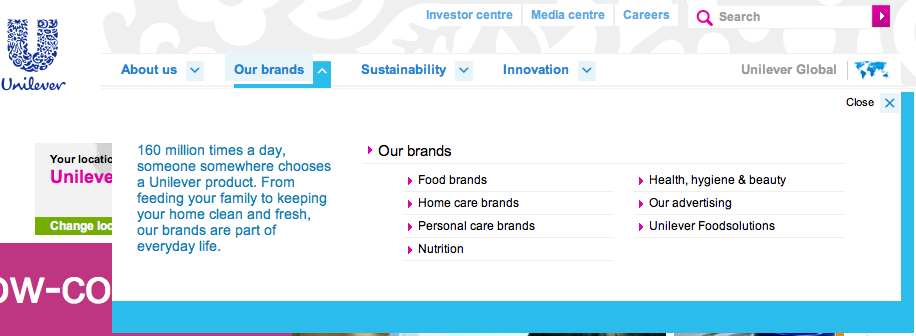
Unilever branding techniques: sub-branding

Unilever branding techniques: sub-branding

Does this introduce a new stage in brand building?

Does this make the profession of brand management totally different?