SoLoMo Democracy. On a local, social and mobile democracy.

Voting. Local elections.

Voting. Local elections.

I’m tripping over political ads these days. Those advertisements basically hold the city as a hostage. I don’t like them. I look forward to the elections though.

After all, election day marks the end of those blatant, flashy campaigns – as there’s only one political party that runs outdoor adverts without elections being near.

But that’s not really what I’m here for today. We obviously have no need for yet another “marketing article”, do we? So why am I writing then today? Why are these elections important? What are they about? And who’s getting my vote?

The City as the experimental playground for local, social and mobile democracy.

First things first. I vote in Kortrijk. A relatively small city in the far west of the country Belgium. This means I have to vote more than average. And it’s not even a right, it’s an obligation. To understand why I need to vote often, one must know the country’s structure. The structure of Belgium is not rarely bookmarked as the most complex and absurd in the world. It would take us to far however to explain that here. For those who’re interested, I previously posted an article that links to a video that explains Belgium in a fun and easy way.

Local Democracy

For now, I believe it is sufficient for you to know that this time we’re voting for the lowest jurisdictional level there is. And that’s exactly why I believe it’s important. The city’s competences are the most tangible of all. It matters topics people feel daily in their day-to-day life. Since it’s about themes they’re actually dealing with, it’s more likely that they develop their own ideas, vision and opinion about it.

Social Democracy

Having said this, one could think that today we are at the frontier to fully unroll the very concept of “democracy”.

Democracy is a form of government in which all eligible citizens have an equal say in the decisions that affect their lives. – Wikipedia, the most reliable peer-2-peer reviewed encyclopedia.

The world’s digital extensions allow us to easily implement the idea of ‘in which all eligible citizens have an equal say…’. Just think about a city that’s deeply engaged in social media listening and takes into account the elements it picks up there. To be clear, this social democracy is not just about social media. It means involvement of the citizens by the political representatives of which social media listening is only one of the means to do so. I also recommend having beers in local bars as a way to collaborate on the city plans and policies.

Mobile Democracy

As the world moves forward more and more activities become place-independent. People have higher mobility thanks to mobile devices and ditto technologies. However, there’s ambiguity in here:

“The more mobile our activities become, the less mobility we have.”

Just think about the many minutes (or even hours) you’re stuck in traffic – hardly moving, hardly being mobile.

The city as a small democratic entity must be the playground for the above evolution. It could mean that they take the front-seat with regards to mobile networks, mobile infrastructure, mobile technological innovations and use them to solve all mobility issues like traffic jams.

I do realize my vision upon “mobile” might be a little confusing. It’s not about mobile devices. It’s just another evolutionary story. For more details, please slide through the below slideshare keynote.

How do you feel about the SoLoMo Democracy?
Why stress when you leave for a relaxing holiday?

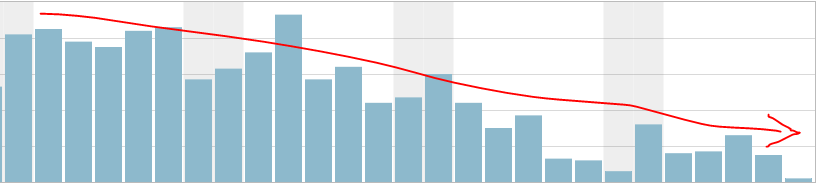
Crashing stats? It’s summer.

website visitor stats - seasonal fluctuations

website visitor stats – seasonal fluctuations

Regardless of your goals, KPI’s and other metric things, you need to attract visitors to your website after which seduction might occur. As I heard lots of web places suffer from declining visitor numbers during summer, I ran a little check on this blog. And yes indeed, my stats are also down. It seems as if sun and holidays influence online behavior. Makes sense. It’s way cooler to be outside than to scan the web for articles. Or did we collectively all just became less interesting?

Anyway, you shouldn’t stress out on these seasonal figures (unless you run an ice cream business or a pool business or you name it). What’s equally important however is not to stress about your own holiday. And that’s what I want to have about it today.

Pre-Vacation Stress?

Swimsuit? Check. Flight ticket? Check. Hurry hurry. Rush rush. Yell yell.

This might sound familiar to some of you. For me, this seems very contradictory. You’re about to leave for a relaxing holiday…Why do you create stress then? It’s completely useless. Below are some tips to relieve some pre-vacation stress.

  • Get your mindset straight. You’re leaving for a holiday. Why stress anyway? Excitement: yes. Stress: no.
  • Plan ahead. Cover and organize everything early. Time left is for joy and relaxation.
  • Ask help. Other people might take care of your pet, your house, your mail and even watering your flowers, …

Time to take of your shoes and enjoy your holiday.

No need for pre-vacation stress

No need for pre-vacation stress

Beyond employer branding. People are the brand.

Did you ever took time to investigate the right column of this blog? It has some widgets. And one of them suggests that I’m a member of Stima, more particularly a member of the expert group internal branding / employer branding. Regardless of the fact that I’m lucky to participate in the group, I feel like making some specific remarks about employer branding and branding in general. In my humble view employer branding is branding. Brands are people offering a product or a service. Bottom line? What we call employer branding today is in fact genuine branding as marketers always intended it. Employer branding is the future. But the future is now.

Branding

Branding

Branding: a logo, some colours and …

Have a look at the adjacent image and ask yourself the question what exactly is it that makes or breaks a brand?
Is it a logo with some colours?
Is a corporate identity or brand identity merely a design aspect?
Do corporate identity and corporate design merely indicate the same thing?
Or is their something more at stake?

I believe there’s something more to tell about it. To start with, let’s have a look at what exactly is employer branding.

What is employer branding?

Just as you have a brand position within consumer’s mind, there’s a brand position within the minds of employees and potential co-workers. Employer branding is branding like corporate branding. It’s more than advertisement, recruitment and retention. Employer Branding is a mindset. It’s the development of a culture. It’s about making choices and communicating them consistently.

Employer branding management however – and this is the big clue – is all about the interaction of the external employer brand and the internal job preview. Employer branding is the result of the value proposition and the employee experience. It’s about managing expectations. Exceed employee expectations, make them feel proud and encourage them to share that happiness with the world. Result? The external brand as created by marketing communication claims is reshaped.

Employer branding, positive conversations and the external brand

The goal is to manage your people in such a way that employees become engaged and proud, resulting in positive online conversations about their job and brand. Those conversations are consequently picked up by potential co-workers who are eager to work for such a great company. On the other hand, current employees are happy to stay in this amazing tribe / community. But next to that, it drastically impacts the external brand.

How employer branding impacts external branding?

A brand isn’t build in a day. So it must be something more than a logo and/or colours associated to a name. Branding is not something companies and brands fully control. The brand is in fact an association of elements in the heads of the consumers. You can’t control their brain and their thinking (you could do that more easily in the past).

The brand as such is constituted along all interactions occurring with the brand on several touch-points. One of today’s hottest touch-points are the so-called social media. And it’s exactly through those social media outlets that employees co-create the external brand identity. As a result, employer branding becomes increasingly important for the shaping the brand soul.

What’s even more, your corporate brand is your employer brand in the long run. Just think about the transparent, open world we’re living in. Add to that the inflow of Gen Y profiles into companies, and you’re there.

Companies with a negative culture are immediately picked up through e.g. social media expressions by current employees, customers, etc.. This heavily defines brand perception. You better make sure that this “employer brand” or culture matches the external brand created by marketing communication.

Business silos collapsing

Business silos collapsing

Bye Silos. HR & Marketing collaboration.

Sure, employer branding is pretty close to the HR domain. But employer branding looks at HR as Human Relations, not as Human Resources. Yes, the most important word in HR is Human, not resources. Let’s bring back human in business. The social tools are already there. And yes again, the most important word in social media is social, not media.

Overlooking all the above, it’s clear that we should integrate the external (corporate) brand with the internal (employer) brand. Bye silos. HR and Marketing have to collaborate to reach higher mutual goals.