Samson meets F.C. De Kampioenen. Storytelling for Flemish brains?

I recently came across the below YouTube video. It mixes two of the most popular Flemish TV shows ever – F.C. De Kampioenen and Samson & Gert – into a video clip for the latter show. It got me thinking.

Could it be that there’s something like a narrative format that pleases Flemish brains? What constitutes those success factors? And did Bart De Wever – a nationalist populist politician – crack that same code to win elections?

So to answer the questions from the introduction, I strongly recommend to have a look at the above video after which we present some background on Belgium and the TV shows in particular.

Background: Belgium & Broadcasters
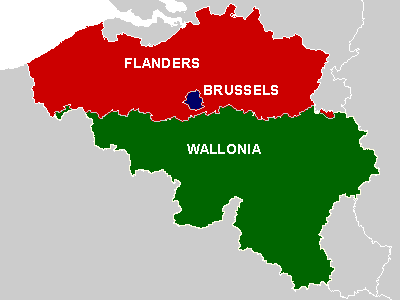
Belgium at a glance.

Belgium at a glance.

Belgium. One of the planet’s most difficult, absurd and surreal countries. Yes, we excel in chocolate, beers and waffles. And that’s a good thing. But apart from that we organized our country into distinct regions like a French-speaking part called Wallonia, a Dutch-speaking part known as Flanders and a mixed region known as Brussels.

There’s something remarkable about Flanders and its most popular TV shows.

Successful TV Shows on Public Broadcasting TV

The Belgian broadcasting landscape is organized along the same lines of the country. That is to say, TV is organized and managed by the regional governments. In case of Flanders, the Flemish government takes care of the media landscape. That landscape is a mixture of public broadcasters and commercial broadcasters. It’s important to realize that the public broadcasting service is quite popular up until recent changes in the media landscape.

What’s striking however is that this public broadcaster often airs the same shows. This allows them to recycle content without investing in the production of new shows. Equally important is to point out the fact that the ratings for these shows remain impressively high.

Over the last 20 years there have been two remarkable TV Shows. Those were so brilliant that they were aired year after year.

Flemish TV Shows as a cultural meme?

During my entire lifetime there seem to be two extremely successful TV-shows, one for ‘adults’ and one for ‘kids’. I’m respectively talking about ‘F.C. De Kampioenen’ and ‘Samson & Gert’. Both have been aired and recycled year after year that an entire generation of Flemish people actually knows these stories as if they were a cultural meme. Hey, I believe today they actually are one.

But why exactly are these shows that popular? I believe one needs to find the answer by looking at both shows. For me, it’s quite clear that both shows draw upon the same principle. The way the narrative is structured and told is the same. The only thing that differs between both shows is in fact that the one is for adults and the other one is for kids. In practice, it comes down to a family wide social TV watching experience.

The Flemish brain?

Why do these stories appeal the Flemish people that much? And why don’t these stories appeal to the Dutch-speaking neighbouring country ‘The Netherlands’? Yes, we tried to export both shows. The one for kids worked fine but wasn’t as big in the Netherlands as it was in Flanders. The TV show for adults was a complete disaster: Dutch people did not like it at all. Was it our humor? Or is there something more at stake here?

I believe that the TV shows are popular just because of the way the story is told. The stories are wired for a Flemish brain. The only thing I need to find is a method to analyze stories so to check whether this hypothesis is valid anyway.

How to analyze TV Shows as a story?

In order to find the “success narrative elements for Flemish brains” I’d like to analyze loads of the shows of both series and consequently compare both series to one another. The final goal is to demonstrate that both shows act on the same storytelling principles. Principles that are particularly appealing to Flemish people.

Until today however, I’m having some issues developing the right analytical frame to execute a proper content analysis. I would truly appreciate your help. Do you know any studies that have analyzed the narrative as such?

Content Analysis Framework to discover the narrative

In order to demonstrate that both shows rely on the same narrative principles, I’m looking to develop a framework for content analysis so to test my gut feeling. The below information from Dr. Chris Griffin seems a good starting point.
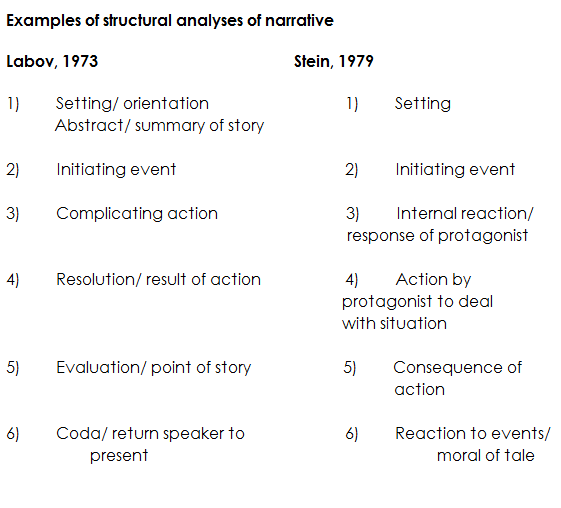
narrative analysis

narrative analysis

Has Bart De Wever cracked the code?

We recently held local elections, as my earlier article demonstrates. And regardless of the fact that they were on regional level, Bart De Wever was able to take it to higher levels. He had to anyway, otherwise his “story” wouldn’t have made any sense.

Bart De Wever, N-VA

Bart De Wever, N-VA

But now that we touch upon the story-aspect. Is the political success of Bart De Wever related to his storytelling tactics? Does he deploy the same techniques that F.C. De Kampioenen and Samson & Gert stories do? I believe he might have. What he certainly does is simplifying reality. This has been proven in a Ph.D. “N-VA. Analysis of an ideology.” that states “the party reduces democracy to a temporary dictatorship – meaning: the ones who won the elections are the only ones that can actually reign. In their story they are the only valid voice of Flanders. And this story is often repeated in media outlets: N-VA and especially Bart De Wever are the personification of the moral community of the “Flemish people”.

What else could explain “Flanders Only” popularity?
Why stress when you leave for a relaxing holiday?

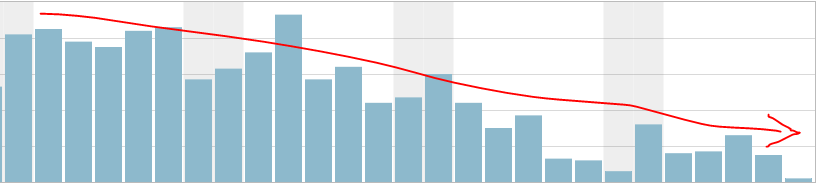
Crashing stats? It’s summer.

website visitor stats - seasonal fluctuations

website visitor stats – seasonal fluctuations

Regardless of your goals, KPI’s and other metric things, you need to attract visitors to your website after which seduction might occur. As I heard lots of web places suffer from declining visitor numbers during summer, I ran a little check on this blog. And yes indeed, my stats are also down. It seems as if sun and holidays influence online behavior. Makes sense. It’s way cooler to be outside than to scan the web for articles. Or did we collectively all just became less interesting?

Anyway, you shouldn’t stress out on these seasonal figures (unless you run an ice cream business or a pool business or you name it). What’s equally important however is not to stress about your own holiday. And that’s what I want to have about it today.

Pre-Vacation Stress?

Swimsuit? Check. Flight ticket? Check. Hurry hurry. Rush rush. Yell yell.

This might sound familiar to some of you. For me, this seems very contradictory. You’re about to leave for a relaxing holiday…Why do you create stress then? It’s completely useless. Below are some tips to relieve some pre-vacation stress.

  • Get your mindset straight. You’re leaving for a holiday. Why stress anyway? Excitement: yes. Stress: no.
  • Plan ahead. Cover and organize everything early. Time left is for joy and relaxation.
  • Ask help. Other people might take care of your pet, your house, your mail and even watering your flowers, …

Time to take of your shoes and enjoy your holiday.

No need for pre-vacation stress

No need for pre-vacation stress

Why you better Cut the Crap: Service is the Old & New Gold.

Service is the new gold.

Service is the new gold. (credits: boomerang cards).

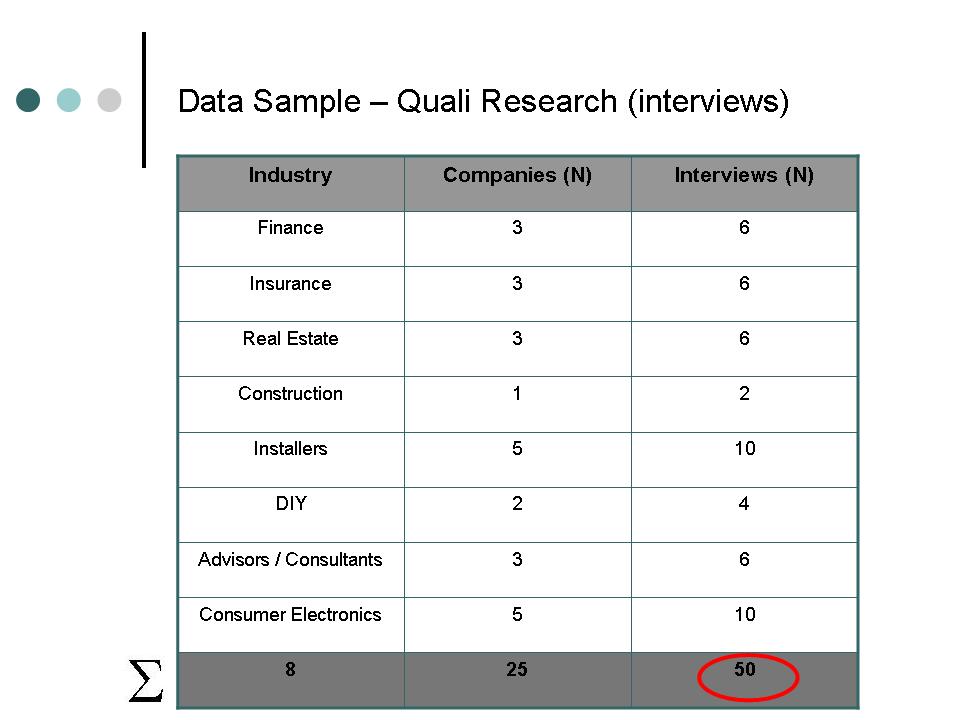
I agree. It’s been way too long since I pressed down another story here. Not without a reason though. I’ve been crazy busy visiting companies from about eight industries to perform in-depth interviews about their business and their future. It has been a wonderful experience so far. And it shouldn’t come as a surprise that I generated tons of insights from this qualitative market research period. I want to share my main insight today:
“Cut the crap and stop pushing it on to people. Be real, bring value, show respect and be helpful to every customer. In brief: stop screaming, start whispering.”

Service is the Old and New Gold.

Loads of consumers became disappointed in companies, products and services. As a result, corporations and organizations are sometimes seen as “evil”. I believe this is the result of what I call “the old marketing”. Most brands and organizations still rely on 20th century marketing principles: manufacture something against the lowest cost possible and consequently pay much money for advertising to create a positive image so that consumers buy your product. The only thing that matters is short-term profit, not a long-term sustainable contribution to society. I’ve always revolted against these types of companies. They are indeed “no good”. They don’t contribute to a positive society and consequently a better world. They do not “serve” their customers through good products, honest communication and real value.

Service is Gold.

Service is Gold.

That marketing-enforced image however has always been put in perspective by the customers themselves by sharing their experiences: word of mouth. And what’s even more, word of mouth has always been the most trusted source of product or service information. Unfortunately it had little to no big scale leverage so that “evil” corporations could live happily ever after. So, if one customer was dissatisfied by the service he told it to about 20 people and didn’t rely on the company in the future any more. But for the company, that was not really a problem. The customers that decided to leave were replaced by new customers who bought the marketing story.

I truly believe (and hope) the days of “high churn because we produce crap is solved by acquisition campaigns” are over as social peer-to-peer technologies became mainstream and leverage Word of Mouth on a huge scale.

What is Service? Think long-term reputation vs. short-term profit.

If one states that service is key, he needs to define what exactly is service. Based on my interviews, I’d say service is about small things, but things that can make someone’s day and stick in their memory. It’s about going the extra mile, about doing something you actually didn’t have to do. It’s about the goal to serve in order the make life (or businesses) easier and better. It’s the social aspect, it’s the human touch. It’s not about social media. Those only give large-scale opportunities to foster on this service behavior.

Research details

As stated above and in the introduction, the above isn’t just a gut feeling. It’s inspired by real-life (analog) talks with leading people within several industries. Below is a small overview of my data sample. Please allow me to just recycle one of the original research presentation slides. It’s important to realize that within this sample some of the companies were active on social media – which was the drive to act more service-wise – and others who were completely inactive on social but have always put the customer in the center of its existence.

Quali Research Data Sample

Quali Research Data Sample