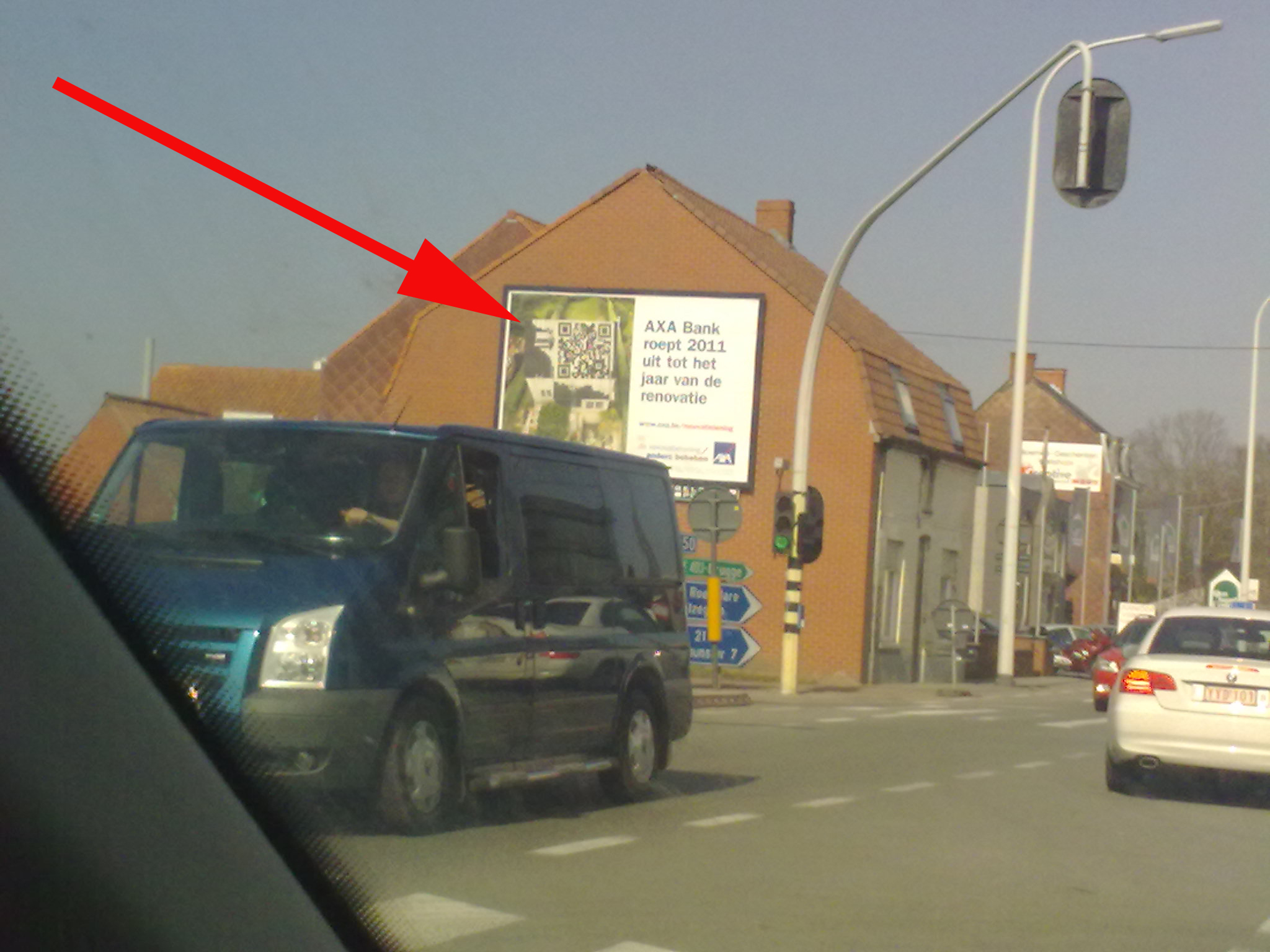
Who's ever going to tag this QR code anyway? On AXA Bank's outdoor ad.

Axa puts a qr code on large format print ad on a busy road

Axa puts a qr code on large format print ad on a busy road

During one of my many escapades on the road, I came across the advert above. The ad is to promote a beneficial “renovation loan” and the offer is only valid until the end of 2011. So you’d better renovate your home this year to get the deal, right?

Don’t bother answering the above question. I have different issues with the ad. I believe the ad demonstrates that many marketers still don’t understand technology from a consumer mindset. I also believe that the usage of the QR code in the ad was solely driven on the fact that earlier that year a competitor launched a campaign in which the QR code was given a rather central position. So the ad clearly demonstrates “old-school competitor based marketing”. But let’s start by briefly describing the ad.

Description of the ad

The large format printed advert is clearly divided into two separate yet linked parts.

  • Right frame: the right frame contains the advertising copy and the logo of the company. The copy states “Axa proclaims 2011 as year of renovation”. People should link renovation with renovating a house and a special renovation loaning. So far so good, I managed to get that.
  • Left frame: the left frame is an image. It seems as it depicts the act of tearing down your house’s wallpaper and running into a hidden QR code behind it. I didn’t see wallpaper in the left frame while driving by. But I did notice a big QR code – hence the picture.

Who’s ever going to tag this QR code anyway?

First of all: do most consumers already know about QR codes? Shall they realize it? Or do you only want to address the “geeks” to renovate their house in 2011? I can tell you one thing: geeks are often not that into “DIY stuff”. Maybe you’re addressing the wrong target group with your renovation loan promotions?

Second, assume consumers are completely into QR codes already, how on earth can you tag this code while driving by at 90 km / hour? It’s already hard to take a picture of it. Let alone tag it with your mobile phone.

bnp paribas fortis qr code in advert for mobile banking

bnp paribas fortis qr code in advert for mobile banking

To end I would dare to say that the QR code is there just because they can put it there. Or is it all about parroting the competitor?

Why a QR code? Because BNP Paribas Fortis had one?

I believe AXA bank used QR because their competitor BNP Paribas Fortis did earlier that year. However, how BNP Paribas Fortis deployed it was completely different. BNP used it to launch their mobile banking application and services. And because I believed it was quite impressive, I even reported on their break-through mobile banking app on this blog but I didn’t relate to the way it was promoted. Today I will though.

Promoting online banking with a QR code

Why would it make sense to put a QR code on an advertisement for mobile banking and not on an advertisement for renovation loans?

  • Because a QR code is scanned with a mobile phone.
    People scan the code and they are automatically taken to the mobile banking app. That’s just great, that’s convenience. If you force people to scan a code that has in fact nothing to do with mobile, why would you do the effort? Why would you spend the money?
  • Next to that, BNP’s QR codes were easily scannable.
    You could easily scan them because they were in newspapers, magazines and on in-bank posters. Not on large format. Not next to a speedway.
  • Finally, the target group.
    Yes, early adaptors of mobile banking will probably know a thing or two about QR codes. And no, people who renovate their houses are not particularly interested in geeky stuff.

What CMOs and agencies need to learn from this

  • Don’t just use technology because you can. Make sure it matches your target group.
  • Don’t just do something because your competitor did. The trick is to stand out. Will never happen if you parrot!

Say hello to the Hybrid Marketer.

I think this relates to an interesting debate that was held at SXSW, Austin, Texas, USA. Unfortunately I couldn’t make it to the event and this debate. So if anyone can send me a summary, I’d be very thankful. Anyways, here’s how they framed the whole issue:

How much do marketers (& their agencies) need to know about technology? Advertisers and brand marketers are entering a brave new world — one where code is on par with content. “Consumers” are now “users.” So should “marketers” be “developers”? Enter the hybrid marketer. More and more agencies are finding they need to educate and cultivate a new breed of people who understand tech from a marketing and brand perspective, and who have a consumer mindset. At the same time, agencies are adopting practices–agile development, continuous deployment–learned from the tech world. But should they really try this stuff at home? Should “marketers” be worrying about, say, the video capability of the latest iPhone, or pushing the envelope with HTML5? Or should they just stick to their core competencies and work with established software companies / dev shops to realize their ideas? How else is technology affecting the agency model and the creative process?
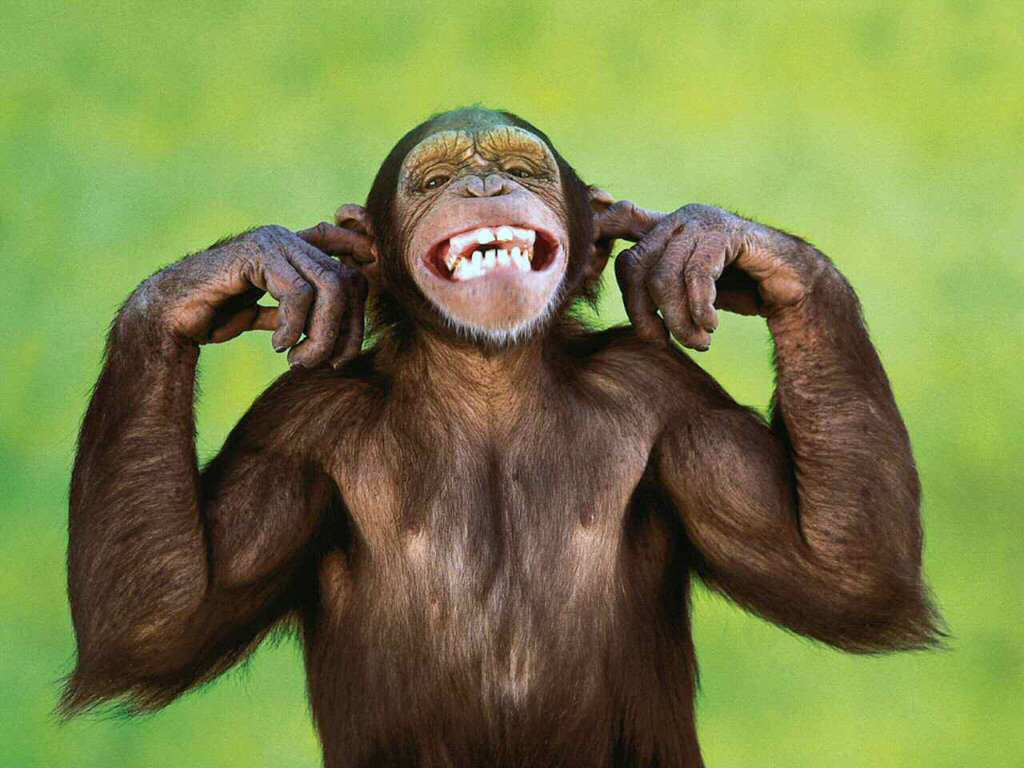

This Monkey is in for some Candy. And Stories.

Monkey brains want stories.

Monkey brains want stories.

Please Listen very carefully to what this monkey has to say. He shall say this only once!

It’s monday evening. You had another marvelous meal with your family. Children are to bed. You’re all set.
Couch? Check. Tele? Check. Wife half asleep under the blanket? Check. Game on? Check. Candies? Check.

Hold on, wait a minute!

Didn’t you just enjoy a great dinner with wife and kids? Do you really need that candy bar? I thought children were to bed? I can tell you one thing: you don’t want candy. So why are you eager for candy than?
Well, simply because you have a monkey brain!

You’re telling me I have the brain of a monkey?

No offense, but yes I do tell you that you have a monkey brain. Period. Let me explain. In fact, you still have that brain from back in the days people lived in caves. And it’s that caveman that is hard-wired deep inside of you that makes you want to have candy. You know back in the cave days, sugar was scarce. So we took every single chance we had to pump sugar into our body.

Nowadays, we still have that same brain. We still take every chance we have to eat candy. However, in today’s world sugar isn’t rare it all. It’s everywhere. But our brain doesn’t realize that. What our brain also doesn’t realize is that it simply loves stories.

Monkey brain loves stories.

Back in the cavemen days, stories were the manner to transmit information and knowledge in such a way that it was easy to remember and to share. The explanation speaks for itself: in an oral culture – where content is transmitted via speech – one needs a certain “angle” to find something compelling in order get attention, to be remembered and – especially to be shared. And that’s where stories come into play.

Stories create an angle. An angle makes something remarkable. Something that is remarkable enough to be noticed. Something that is that impressive that you might remember. Something that is that awesome that you need to share it with your peers.

Storytelling as a means to pass information - cavemen speak

Storytelling as a means to pass information - cavemen speak

Stories are told with moderate voice, or even whispered!

As stated before, in oral cultures, information was passed along through the usage of stories. As people were unable to transcend distance, only those at the right time and at the right place were able to hear the information. They were close enough to hear a story being told. A story brought to them via the medium ‘voice’ or ‘speech’.

The medium wasn’t disruptive and messages weren’t loudly screamed at participants. People who wanted to take part were pulled towards the storytelling circle, because of their interests, because of the fact they belonged to the community.

What we should realize here is that “stories” and “storytelling” are hard-wired into our cavemen brain – as is our love for sugar and thus candy. OK. Fact. But doesn’t the monkey brain brings along implications for today’s business, marketing and communication?

Not authentic? Sleep outside of the cave... not safe for mammoths!

Not authentic? Sleep outside of the cave... not safe for mammoths!

The monkey brain and your business, marketing and communication efforts

I didn’t tell the story above without a reason. I want to distill some essential characteristics of human communication and relate them to the world of business, marketing and communication.

The thing is, we are still cavemen, all of us. Our brain still favors elements that are compatible with a cavemen environment. We live in a modern world with a prehistoric brain. So here we go, what are the implications of the monkey brain for business, marketing and communication?

  • Don’t push it, Pull me. But pull me hard, Baby!
    The storytelling phenomenon from the cavemen clearly demonstrates that information or messages should not disrupt (push). Creators and distributors of information made their content that relevant that people were basically dragged towards them. In this manner, creators could whisper the story to the people in the circle. The circle is what we label today as a community.
    Today, with so-called social media, we have the chance to spread stories and make them easily accessible for anyone. Through conversations about the story, the community is build. No need for shouting. Whispering works just fine.
  • Connect people, Stupid!
    The whole point of the cavemen culture was to connect people by creating a “shared knowledge base” crafted through stories. Because of mankind’s evolution we altered from this and we started screaming our information. After all, screaming was the only way to reach people spread across the globe.
    Today, with the rise of social conversation digital media, we have the chance to act close to our monkey brain again. We can whisper messages to people in our storytelling circle slash community. To match the monkey brain, a whispering approach seems to work well. As a result we need to show ourselves in our authentic way, fully transparent.
  • No spinning please, those sleep outside of the cave.
    Social control was rather big in cavemen society. People that told stories that weren’t authentic or fully transparent weren’t appreciated. They were condemned to sleep outside of the cave. Pretty unsafe for mammoths!
    If you aren’t authentic and transparent today, you’re well on your way to loose all the monkey brain people – which is basically everybody! So you might want to consider…

Old marketing versus New marketing

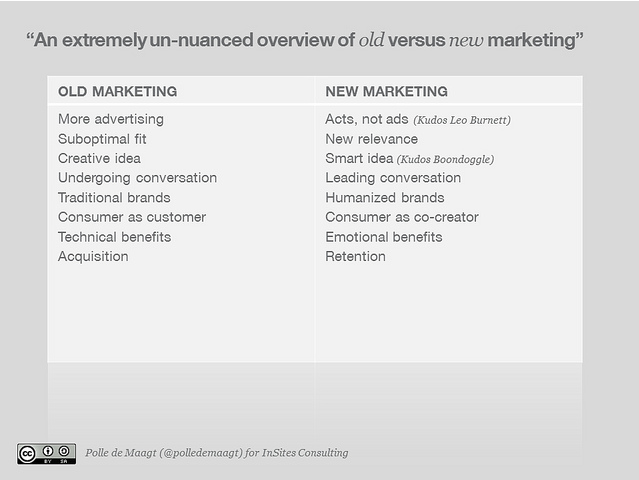
It seems as if the above reflections result in the same conclusion as made by market researchers. Here’s something I found through Twitter (yes, Twitter): a “bit of Polle Demaagt” from InSites Consulting. I believe at the end, we (try to) indicate the same thing. For those who rather have schemes than a story, I’m talking about the scheme below.

Old versus New Marketing - Insites Consulting / Bits of Polle Demaagt

Old versus New Marketing - Insites Consulting / Bits of Polle Demaagt

That’s why I Whisper through the Web in XL, Medium and Small

The above shows why I whisper through the web. Yes, I don’t wear a monkey suite. And yes, I do realize that the baseline “screaming is from the past” doesn’t completely fit. But I hope to have demonstrated that in the cavemen era people whispered in a community – they did not scream to people outside the community (who didn’t care about the information) and that we consequently altered from this, but that we now have the chance to go back to acting like our monkey brain loves most.

See which stories I whisper through the web? Hit the below links:

Oh, just one more thing.

The above is just my story, framed for a special purpose. I could have framed it completely different. But here’s why I did not.

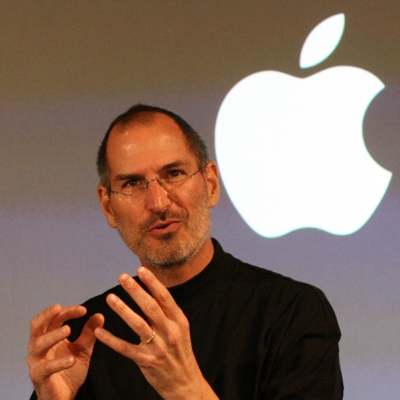
Just one more thing - Steve Job sentence

Just one more thing - Steve Job sentence

The story of me ending up writing this story

Date is March 2010 or something like that. I decided to set-up this blog. Did get an average of 23 people a day. Hooray!

OK, it helped me to get rid of my writing anger. But clearly, it soon appeared that I wanted more. So I ended up thinking about adding some touchpoints for the blog: a twitter account, mention it on linkedin, tumblr account, etc. Options were numerous.

I decided to go for Twitter first. I think we were September 2010 by then and it’s one of the key drivers of writing this piece.

Twitter as a home-cooked private teacher

There you are. You have a twitter name. Congratulations! Now what? What to do with it?

I decided to consider Twitter as my private teacher as I figured a lot of interesting people had to be active on Twitter: MBA professors, Industry Thought Leaders, etc.

Twitter is full of crap

Twitter

Twitter - try to craft it into a first-class professor

Setting up an attempt like crafting Twitter into a first-class MBA professor is hard. Quite frankly, I’ve unfollowed loads of people that I followed at the start of my Twitter experience.

But one guy has been there almost from the very start. And I’ll probably never unfollow him: @rafstevens.

@rafstevens, my Storytelling teacher

I was intrigued by Raf’s project “The New Trade”, a crowd-funded and crowd-sourced book on Storytelling for business. So I asked Raf: “how does the collaboration process work?”. Raf kindly replied me “why not have a phone call about that” and provided his phone number. I promised to call him the day after. I didn’t. It slept my mind. My apologies.

However, I decided to take this “social error” (not calling as promised) into an advantage. After all it gave me the time to get more details and insights on the entire storytelling thing.

I used Twitter (and @rafstevens in particular) to obtain an MBA in storytelling. With Raf’s expressions and links to other world-class storytellers I started to realize what it’s all about. Or at least, I believe I do. I wonder if Raf thinks so too.

Where is my Senseo / Nespresso sugar? Questions to a sugar cube factory!

Would it make sense to make a pad-and-capsules-compatible sugar cube?

Coffee. Loads of books have been written about it. Drinking coffee is an experience. And this experience has changed. At least when one thinks about new coffee machines that change the way we make, drink and experience coffee. What didn’t change was the sugar you put in your coffee: a cube. Why not change the sugar cube as well

cubing machine for the sugar industry by cfs-aquarius

cubing machine for the sugar industry by cfs-aquarius

What’s new in coffee machine land?

Question to the sugar industry

  • How would you market a sugar cube for Philips Senseo? For Nestlé Nespresso?
  • What message could you possibly bring?
  • What Channels would you deploy to reach that? Would you make it exclusive to stylish hotels, restaurants, bars?
    For Nestlé: only available through the community/club/members? Or full force retail? How would you package the cubes? And how do you believe this will influence the adoption of the new sugars?
  • How does such a sugar cube look like? Does such a cube require integration with the machines from the market leaders in pad- and capsules-land? Pads and capsules are integrated into the machines since you have to put them in to produce the coffee. Maybe the sugar cube needs to be integrated in the machine as to be able to introduce the sugar while operating the machine (in analogy to the pads). If you’d select this option you might even conclude that the sugar cube you were looking for does not necessarily needs to be a sugar cube as we know it today.
  • Would you need to team up with Philips and Nestlé? What would be the best way to develop business relations?
  • Do you have machinery in place that can handle mass manufacturing? Since this is a new product how much would it cost to build a machine that makes the special cubes?
  • How would you promote/advertise new sugar cubes?

Note on my coffee drinking behavior

I drink coffee. I enjoy coffee. I always drink it black. Sugar? No thanks!