Postmodern intertextuality in contemporary popular music: mashups

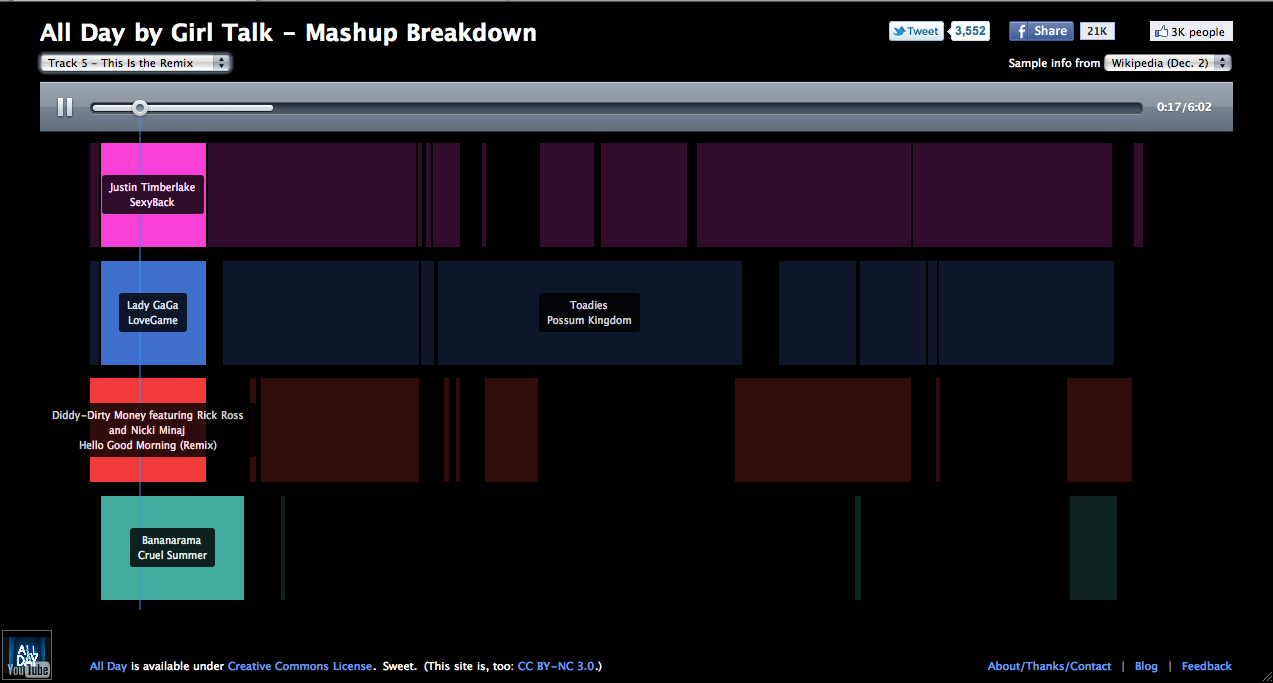
Within current popular music culture, we witness the interesting phenomenon of “mashups” – a composition created by blending two or more songs that often involves an overlay of the vocals of one song over the instrumental of another.

Mashups are an obvious and beautiful example of what postmodern theorists mean with intertextuality. Thanks to a clever technology, you can now hear, see and feel intertextuality in your web browser. Listen, look and party here! Enjoy!

Postmodern intertextuality in contemporary music

Postmodern intertextuality in contemporary music: mashup

Spatial planning strategies struggle to meet demands network society?

During one of our “search sessions” on random topics on google scholar, we stumbled upon an interesting article written by Healey, P.: “Network Complexity and the Imaginative Power of Strategic Spatial Planning.”

Not being an expert in both matters it was interesting to see how a discipline struggles to comply with knowledge from another science. As suggested by the article, spatial planning is still theoretically struggling to give answers to the characteristics of the network society.

Debate: the network society and implications for spatial planning?

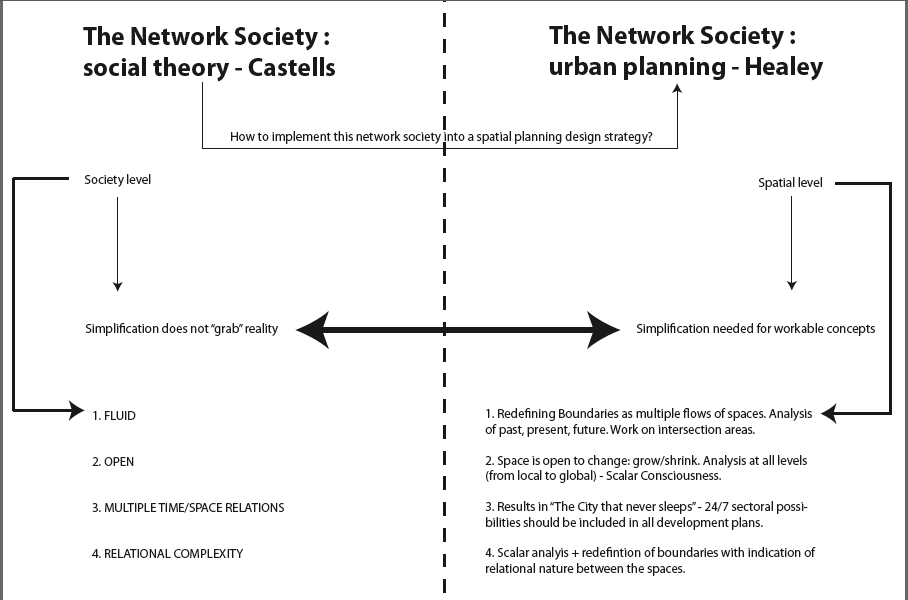
The world has changed. Societies have changed. Concepts for spatial planning remained untouched. In order to know how planning could adapt to the challenges of the network society, one needs to define the specifics of this society. The article argues that a network society is fluid, open, complex and experiences multiple time-space relations.

How to answer the challenges?

Healey critiques the determinism resulting from the usage of architectural concepts for spatial organization. She suggests to find answers in sociological theory and/or geography studies. Once again a call for a multidisciplinary approach. Below is an attempt to translate the theoretical concepts into design strategies.

We apologize for this extremely theoretical post. Some like that however.

Spatial planning strategic challenges to comply with network society

Spatial planning strategic challenges to comply with network society - free, based on Healeys publication mentioned in the article

Vuvuzela: why to love it? Lessons from ethnomusicological classes

These days there’s a lot of “buzz” about the usage of vuvuzela instruments at the World Cup Football in South Africa. People seem to be annoyed by the “vuu-vuu” noize. Nevertheless, I want to make a case for the Vuvuzela.
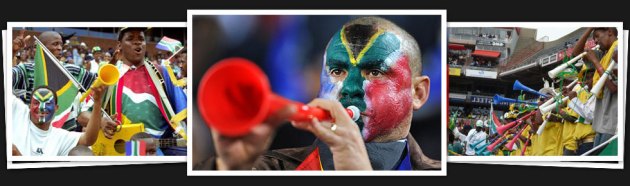
vuvuzela

vuvuzela

Ethnomusicology.

A couple of years ago I was glad to take a class called “ethnomusicology”. Ethnomusicology is a branch within musicology. The first studies social and cultural aspects of music in local and global contexts as opposed to the latter which is more designed for and dedicated to Western art music (classical music). So to speak, ethnomusicology studies music as a human, social and cultural phenomenon.

Lesson from the classes about African music

One crucial aspect about the “music” (regardless of their diversity) in African societies is that it was (is) an inseparable part of societal live. This means e.g. that African music has to be understood within the realms of other structures that evolve around the “tones” and “noises”. Those structures are: events (religious or profane: a celebration), dance moves, costumes,  body paintings, …

Well, I guess you already start to see the link between the world cup and the vuvuzela. It’s just a habit, a ritual  – so don’t be annoyed by it.

The “vuu-vuu” noise as a means to a state of trance

Some traditional African music had the aim to get in some sort of “trance” in order to get closer to nature or God (for instance). I believe the monotone sound of the Vuvuzela is rather reverberating instead of annoying. I can imagine that the players on the pitch never really notice the “vuu-vuu” sound – but instead feel a certain “drive”, “tempo” that encourages their play.

Share