The future CIO is not an engineer.

World has changed, IT should change.

World has changed, IT should change.

I believe the world has changed, forever.
CIO and IT leaders need to re-align to this change so to further prove their value in the future.
As a result the IT department is increasingly attracting business profiles who serve as an intermediary between information technology and business processes.
Next to that, the rise of social media and the so-called consumerization of IT spurs new communication across business units, resulting in a ‘flat’ organization. It’s exactly here that IT can prove its value.
The CIO needs to be a true leader. He must think strategically and have impact on the company’s decisions. To fully realize this, IT must look for the human side again – both in the IT organization itself and in the IT systems. Hence our bold statement “the future CIO is not an engineer”.

Change because IT changed

Until recently IT innovation merely took place within the business spheres. Nowadays, we witness the opposite: IT innovation moved into consumer domain. One can firmly state that companies like Apple and Google develop smart services and devices for the consumer first.

It should not come as a surprise that those services and devices are increasingly entering the corporate world. What’s even more: the new generation of knowledge workers is expecting the same ease in their professional spheres. Unfortunately many companies aren’t deploying similar tools. In my view they aren’t doing it because of their attitude. They believe bringing in those solutions isn’t very secure. This attitude needs to change.

From personal to personalized computing

We could describe loads of technological innovation that contributed to this shift (multi-core processors, lithium-ion batteries, development in “flash memories”, …) but the most important aspect is that it transformed the way many people experience computing. The PC may have been personal, a smartphone or tablet is almost intimate and you can take it almost anywhere. The PC is indeed personal but nowhere near as customizable as the smartphone or tablet. The way Apple marketed these devices has only enforced the notion of technology as something personal.

Cloud computing to drive mobile computing

Cloud Computing

Cloud Computing

For much of the personal-computing era, the content that people needed for work or entertainment had to be stored on the PC’s hard disks or on external hard drives and corporate servers. Today data and content more and more reside in the “Cloud”: large server infrastructures, often run by Google or Amazon, where huge amounts of data are stored for retrieval from almost anywhere in the world.

The rise of the cloud has also created an explosion of other consumer-focussed web services. These include big social networks such as Facebook and FourSquare. These services enforce the use of cloud instead of hard disk drive.

Other small companies are also placing powerful tech tools in people’s hands. Dropbox (or the Belgian equivalent of Filip Tack, Nomadesk) lets users upload assets via an easy-to-use interface and then retrieve them from many different devices.

The app way of life

Mobile computing relies heavily on apps. But apps are nothing more than chunks of software that get things done. However, the impact cannot be underestimated. It turned people into creatures who do not longer want to wait upon a PC hard disk that reacts to the request. Apps are simple, cheap and give instant gratification. Something that’s not that easy on PC, especially when dealing with legacy software solutions within corporate environments.

Personal Technology at Work

We are about to see a new generation (Gen Y) entering the work space. You’re about to recruit from a generation whose expectations of technology have been profoundly shaped by Facebook, mobile apps and other innovations (like cloud storage). But do not understand this wrongly. It’s not only the new generation of digital natives who are horrified by the corporate IT systems. The rapid spread of tablets and smartphones, and the attraction of social networks and other online tools such as Twitter, mean that people of all ages have grown accustomed to having powerful yet easy-to-use technologies at their fingertips. Many of them want the same stuff at work too.

But that’s not everything. There’s a change in society as well. The change of gradually blurring lines between private and business lives, which means that people rely on technology much more to allow them to work or play anywhere at any time.
Personal Technology at Work

Personal Technology at Work

Do not underestimate the impact of personal technologies at work

Studies point out that a lot of IT departments underestimate how much employees are using their own technology, including social networks and other web services for work. Internal tech teams are often accused of falsely using the “security” concern to justify tight control about which devices workers may and may not use.

CIO and IT need re-alignment

Historically many IT departments have treated people as tech stupid who should do what they are told by the engineers. Now however IT departments are facing a challenge to their authority. Much of what workers are demanding is the right to use their own smartphones and tablets for work, to mix business and personal data on them and to personalize them with their own apps. This frankly is the anathema to IT departments running digital dictatorship.

Rather than a few geeky people bringing in technology, today it’s a full army of employees. Left undetected, their DIY efforts could cause sensitive corporate data to leak and open digital doors to hackers. However, this treat seems exaggerated. Verizon published a study in 2010 that concluded that most of the corporate data breaches were due to direct attacks on corporate servers, not to mobile devices.

The best policy for CIO’s is consequently allowing these devices but to make sure there’s reasonable security on it. Pretending it’s not there would be really stupid.

The new role of CIO and IT department?

Not so long ago many internal tech teams focused on installing gigantic software systems to handle business processes like accounting or human resources. Most of these are now in place, though they require maintenance. This means IT now has more time to be a partner supporting business divisions. Enabling workers to use the gadgets that they consider best for their job is part of this strategic realignment. Wise companies are not just embracing the consumerization of IT. They are also turning innovations from personal technology to their advantage.

The CIO needs to be a true leader. He must think strategically and have impact on the company’s decisions. To fully realize this, IT must look for the human side again – both in the IT organization itself and in the IT systems. Hence our bold statement “the future CIO is not an engineer”.
Pleading for the Elimination of Social Media from our Dictionary.

Social Media is a hot topic nowadays. Maybe it’s even too hot. Every single one is talking about it: from marketer over IT manager to adolescents. And yes, sometimes people ask me: “what do you think about social media?”. As from today, I will reply those people by saying something like: “well, actually, I don’t know what you’re talking about. Social Media is not in my dictionary. I can say a thing or two about social. Or even about media. But I don’t speak about social media.” Below is why.

Social Media as a term is framing the whole thing in a false matter.

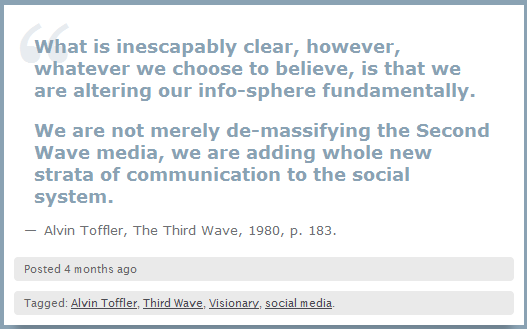
Toffler, Third Wave, 1980.

Toffler, Third Wave, 1980.

Social Media is an all-encompassing term. It points to digital platforms in which the users are responsible for the content – without any or minimal intervention of an editorial team.

Looking at the very concept from this media-centric perspective results in a very narrow view on the nature of what we are experiencing. Social media are a lot more than a bunch of media. It’s a profound change in society. The drastic impact is brilliantly envisioned by a guy named Alvin Toffler. And he already forecasted this back in 1980. Waw!

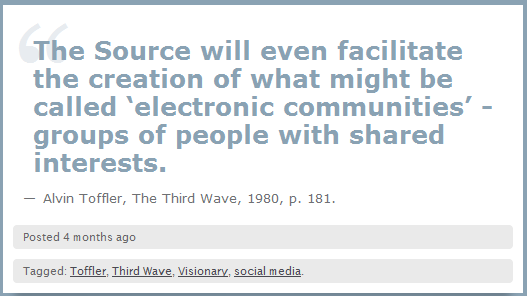
Toffler, Third Wave, 1980.

Toffler, Third Wave, 1980.

Social is change.

As Toffler’s quotes made clear: Social isn’t just an innovative medium that continues along the lines of previous “old” ones. When Toffler speaks about an altered info-sphere and a “Source” organizing people around shared interests in communities, one instantly thinks about the so-called social media we know today.

My Twitter account is a very good example of this altered info-sphere. It’s constructed as the best-in-class virtual professor. It’s build for personal development. It’s constructed to learn. It also acts as a networking platform but that’s beyond the scope of this article.

Structural Change on Multiple Levels

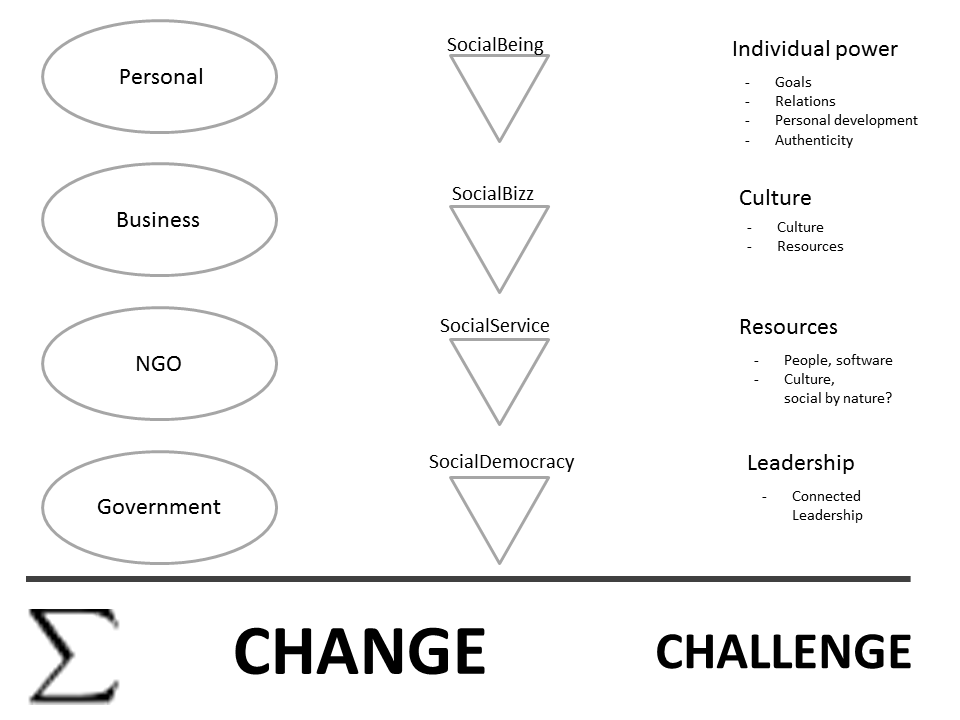
Social brings along structural change on several levels of society: personal, business, Ngo’s, governments, etc. all are to transform into something social. The position of the (social) media (platforms) is just to ease this change. It’s not about technology. It’s more about change and (re-)integrate social into the world.

How and where is “social change”? And what are its main challenges for “adoption”?

Social Media is Change.

Social Media is Change. Change has a challenge.

Why Facebook wins the Social Network Battle. On Flirting, Sex, Porn and Mr Rogers.

Facebook social network

Facebook social network

Earlier this week I came across an interesting study on social media around the world. The presentation is packed with social media data but if you go through the slideshow, you note that the researchers basically conclude the following:

  • There’s one big Network: Facebook.
  • It’s flanked by a few smaller nonetheless successful players: Twitter, LinkedIn.
  • We must keep an eye on smaller, locally succesful players like Vkontakte in Russia and Eastern Europe or Hyves in the Netherlands.
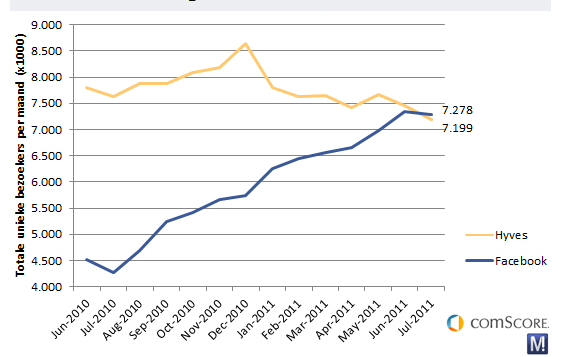
  • In addition to the researchers findings, we want to point out that locally succesful social networks might be thriving these days, but the chances are high that they are to be beaten by Facebook – as happened in the Netherlands with Hyves. The below image shows the decline for Hyves in favor of the Facebook growth.
Facebook bigger than Hyves in the Netherlands.

Facebook bigger than Hyves in the Netherlands.

The research report makes a similar observation: “The Big will get bigger – The small will become smaller”. This doesn’t have to surprise you that much. It’s like with people: the rich get richer while the poor become more poor every day.

Big to be bigger, small to become even smaller.

The value of a social network can be determined by the size of that very network (user base). Now, as the study points out, Facebook is the only one that has an adoption rate higher than 25%. If we think about the mainstream social network battle, this theory suggestst there will be only one mainstream social network: Facebook. I’m so sorry for Google’s tremendous efforts.

Google intelligently trying to give you a hint about it social network Google Plus

Google intelligently trying to give you a hint about it social network Google Plus

Facebook & LinkedIn: why are they ‘big’?

When you’re dealing with the adoption of innovation, one needs to realize that adoption is a human personality trait. Some are early adopters, others are laggards – lacking behind in adoption for every single technological novelty. According to Mr Rogers innovations always diffuse according to this model.

Speaks for itself that this diffusion is boosted when the innovation is actually making life more comfortable, taking away a pain or getting things done faster. Ideally the innovation continues on the path paved by older media so to boost the adoption. Actually, those new media internalize the content of the old medium. This can be seen for instance in radio being “spoken news”; film being “theatrical”; websites being a “digital brochure or businesscard”; etc.

The question is: what pain does Facebook take away? Have we been on this planet for ages with a tremendous pain that is now suddenly being solved through Facebook? How were we able to life before? What pain does LinkedIn take away? How did we do business before?

Facebook and LinkedIn have clear goals

In the case of LinkedIn there’s the obvious advantage of being a functional, B2B platform. And yes, it takes a way some pains related to networking, human resources, etc. It’s a great addition to business.

However, when looking at Facebook, what things did it make easier? I agree, sharing videos, pictures and status updates is very easy to stay in touch with your globally dispersed friends. However, there are other platforms that offer the same function. So why did exactly Facebook win and no other social network allowing to fulfill the same need?

Well, I believe the answer is in the very fact that Facebook was build for the Flirt!

Flirting is the act of demonstrating playfulness, romanticism or sexual overture by one person to another so to subtly indicate an interest in a deeper relationship with that other person. If you have a closer look at the very origin, growth and current usage of Facebook, you might notice that almost everything might come down to facilitating flirts.

The Digital Flirt = Facebook’s Killer App.

Facebook was founded to find and connect with people based on their “face picture”. Facebook made it possible to see who your co-students are, what they are doing without actually engaging but deploy it to set up an offline flirt strategy or charm offensive. Furthermore, the evolution of the platform always favored this aspect. Private messages and IM are perfectly suited for the flirt. Just think about it.

Summarized: Facebook is build to support our natural drive to have sex, to flirt.

Twitter: a flirt challenger?

The report points out that Twitter is a growing challenger. However, it might never reach the popularity like Facebook. Having nothing but 140 chars (minus room for images, links, etc) makes it a lot harder to flirt. But it’s possible though.

But there are bigger opportunities with Twitter. Its difficulty though is that this social network requires the individual to define its own medium goal. Not every individual is able to do that. But for some the twitter goal is about flirting, for others it’s free texting, for others it’s a personal teacher, etc.

Why did I ramble on about that? Well, flirting is a precursor to sex (if you are lucky).
Sex is a rather important social driver.
And sex is closely linked to porn. And porn is important to frame innovations.
And the softie in me believes flirting could be as valid as porn to frame tech-human innovations.
But You should always keep an eye on porn when discussing innovative technology.

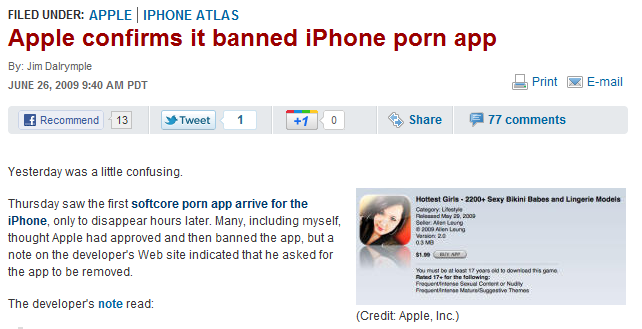
iPhone innovative technology diffusion without porn

iPhone innovative technology diffusion without porn

History has proven that porn and sex are often the key social driver behind the diffusion of innovation. Yes, it’s pretty strange that the iPhone was adopted so fast without supporting porn. But then again, the iPhone was adopted through a range of “taking pain away apps” to be easily installed through the app store. In the iPhone case, it’s not about the hardware but more the software ecosystem Apple cleverly set up. As might be clear, it’s not always about porn. But often enough it is.

Mr Rogers & The Adoption of Innovation

When we are talking about new communication technologies we often tend to focus on the technological aspects. It’s true that without the technology at stake, things wouldn’t be possible. But technology by itself doesn’t do a single thing as well.

To frame innovations, one needs to look at the social factors that determine whether a technology shall reach mainstream or not. Next to that, there’s always the economic reality check. Having an idea and a technology is one thing; to turn that into a viable business is a whole different story.

Specialist often point to so-called “Killer Applications” to explain the break-through. Well, in fact a killer application is an application of the technology that has social relevance. In the case of Facebook the social relevance is flirting. In the case of LinkedIn the social relevance is business networking. In the case of the VCR, it was porn.

Rogers Diffusion of Innovation

Rogers Diffusion of Innovation

The importance of porn in the VCR battle

The diffusion of the VCR was related to 2 phenomenons, to know TV viewing and Film. Especially the latter is important to understand why VHS tapes won the battle – even if they were in a technological sense a lot less powerful than their competitors at Betamax or V-2000.

  • First application: time-shift in TV watching: new medium takes content of the old. This boost adoption since people are used to the content.
  • Second application: Film. And here’s where porn comes into play. The Film Industry (A-movies, blockbusters) were not very willing to offer their movies through VCR tapes. On the other hand the “secundary” Film Industry (porn) were very willing to spread their videos via the new technology. As a result video rent stores popped up and mainly had videos with porn. Most of those were VHS (65%), then Betamax (25%) and finally V-2000 (10%). So this VHS technology concquerred the market while clearly not being the best technology. Porn won!
  • Flirting wins! That’s people, that’s mankind, that’s a monkey brain.

Who’ll beat Facebook?

In short term: nobody. Most people basically hate change. It seems mankind is born with a love for status quo. So why on earth would they want to change their social network? It has been a big thing already to just get on it. But the opportunities for the digital flirt eventually got everyone on board. Now that we’re all on it, who’s going to swop? Most of us aren’t. Most of us love status quo. Most of us hate change.

People don't like change in general.

People don't like change in general.