Content Marketing vs. Marketing Content.

Just before we turn this year’s last pages, it becomes quite apparent that the first chapters of the 2014 book will definitely be about Content (Marketing). As I read a lot of confusing shit about Content Marketing, I believe it’s time to set things straight. First of all, imho, Content Marketing is not (merely) about Marketing Content. That’s why we have to start reviewing the very own definition of content marketing.

Defining Content Marketing

In order to get a solid foundation for proving my point, I’d like to start with the definition of Content Marketing as stated by the authoritative Content Marketing institute.

Basically, content marketing is the art of communicating with your customers and prospects without selling. It is non-interruption marketing. Instead of pitching your products or services, you are delivering information that makes your buyer more intelligent. The essence of this content strategy is the belief that if we, as businesses, deliver consistent, ongoing valuable information to buyers, they ultimately reward us with their business and loyalty.

Redefining Content Marketing 

Don’t get me wrong. The above definition is a valid one. But it just doesn’t live up to its own rules.

The definition mentions customers and prospects but in reality I often notice Content Marketing is limited to prospect communication. Servicing customers with information (content) is left out of the picture. That is a shame. Content is able to confirm the buyer that he made the right choice. I hardly see any content marketer focussing on these customer service content pieces.

Content Marketing is the art and science of communication with all your stakeholders in a non-interruptive way.

Content Marketing is too important to leave it up to marketing. 

Sure, you need marketing content. That’s the typical marketing powerword buzz “we’re the best / the cheapest / the coolest / ..” . That might be true. But people don’t buy that any more. We’re well-educated and see right through your typical agency / campaign power words. And that’s logic. An agency can never know your business, customers, industry, etc. better than you do – regardless of what they state. They cannot. They are very good at coming up with campaigns, making creative good-looking art work for it and generate a proper reach. But that’s campaign content. That’s not the essence of Content Marketing. That’s the essence of Marketing Content.

Content Marketing is structural. Marketing Content is campaign-ish. 

Content Marketing is “always-on” – be it long or short. It’s about bringing valuable content to your stakeholders  structurally, through specific platforms: owned, bought or earned media. The practices of Content Marketing focus heavily on the owned media (website, blog, app, social channels, webinars, …) whereas the practice of Marketing Content focusses on bought media. In short: marketing content is interruptive advertising; content marketing is timely information.

Content Marketing support by an agency? 

Forget it. Traditional agencies will – of course – state they know content marketing. But in fact they know Marketing Content. That’s valuable. But that’s not what you’re looking for. You need a different kind of breed. A new agency. A white-labelled media house. It’s the only valid way to bring content structurally to the right people within the right context.

Content Marketing too important to leave it up to marketing solely? 

As a result, content marketing needs in-depth information instead of shallow power word stuffed content pieces. As a result, one cannot give “Content Marketing” to Marketing only. It’s the marketers job to learn others to catch stories, write about them, etc.

In summary: Content Marketing vs Marketing Content. 

I don’t have any intention to believe that this list is exhaustive. What’s even more, I believe it’s only a starting point to make things more clear. The point is: it’s not about marketing content but about getting (and maintaining) market through your content.
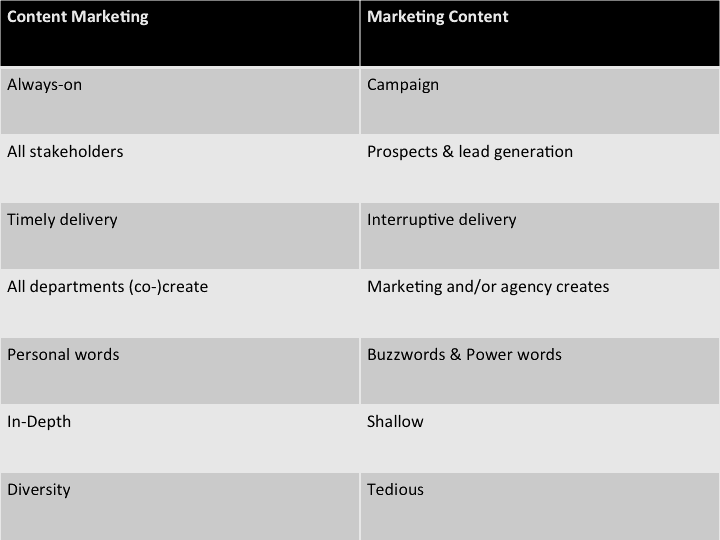
Content Marketing vs Marketing Content.
Content Marketing vs Marketing Content.

Marketing Trend 2014 (& way beyond): Back 2 Basics.

It’s that time of the year again. End of year is always a good time to look back. But more importantly, it’s a moment to look ahead. That’s what most of the trend reports do. They predict what’s going to “trend” in the upcoming year. And that’s exactly my biggest issue with trend reports.

Trends are not limited to a small time span of one year. So basically, all trend reports are talking about what’s going to “hype” in the upcoming year. That’s a shame. Because a hype is not structural. A hype is not significant. A hype can project a wrong image. It can be torn apart from the deeper parameters that are the rationale behind a trend. And yeah, marketers just love jumping onto hypes – for better or for worse.

Back to Basics Marketing: 2014 – 2020

I’m not willing to look cocky here but since a couple of years now, one can notice marketers who drastically alter the way they think, see and do marketing. What’s more important, they’re being successful while doing so. It’s my personal believe – and hope, if I may be that naïve – that as from 2014 this way of thinking, seeing and executing marketing will become dominant.

Back to Basics Marketing has an in-depth rooted hate towards the artificial distinction of Digital Marketing vs Analog Marketing. It doesn’t really matter what media holds the content. The medium is not the message. Marshall McLuhan was wrong. Oh wait, he was right when he coincided the phrase. Today’s media evolutions prove that he’s wrong.

Back 2 Basics Marketing

In practice, back to basics comes down to the fact that “content marketing” is “media agnostic” – it can be online, social, print or face-2-face. The real question is who your target community is and what’s the best way to reach out to them. There’s e.g. less clutter in print marketing today. It means an opportunity for your business to get noticed. Is going back to “older, traditional” marketing matter the true meaning of “back 2 basics marketing”? No it’s not.

Back 2 Basics Marketing is not so much about going back to adult media

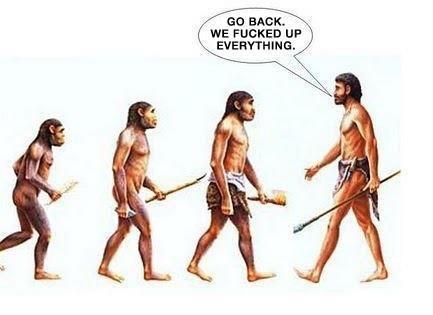
Back 2 Basics Marketing goes way back in time. Back 2 Basics Marketing deploys the tactics that were valid in the age of the cavemen. Those are still very powerful today because we all still have cavemen brains.

Throughout mankind’s evolution and consequently the evolution of communication media, marketing altered those tactics in favor of quick wins though. But as evolution continues, those quick wins disappear. The very essence becomes more important.

Back 2 Basics Marketing

Back 2 Basics Marketing

The essence of Back 2 Basics Marketing

To describe characteristics of Back 2 Basics Marketing, one can look at how “Marketing” worked in the age of the cavemen. Let’s dig a little deeper into that.

Cavemen initially had no media except for their own voice. Speech was important. It was the manner to transmit information from one to another. This not rarely occurred in “community gathering” fashion, to know, gathered around a fire.

It was the perfect moment to inform people about specific skills, knowledge and expertise another community-member possessed. The way information was transmitted was mainly through telling stories. Stories are easier to remember, pass through, etc. than e.g. bulleted lists.

Furthermore, discussing one’s “business” ( = something he could provide to the community) in a public forum (the fire) resulted in a strong focus on delivering quality and servicing customers. Successful cavemen entrepreneurs made sure their quality & service was endorsed over and over again by customers around the fireplace. Today we call that customer advocacy & ambassadorship.

Finally, because of the above context, there was no single cavemen offering “crap” to the market. Crap couldn’t survive very long. All products and services had value that exceeded the pure financial one. Crappy products, services (and hence brands and enterprises) were put to flames during the community gathering.

Expanding Lean, Mean and Agile: from Dev. to Comm.

Lean, mean and agile communications.

Lean, mean and agile communications.

I’ve been active for about 8 years now within the IT industry. And I always envied developers up until very recently. They could work in a lean, mean and agile way. We couldn’t. Marketing and Communication professionals not rarely fall back to “methodologies, tactics and strategies” that proved their power in the past. However, marketers and communication professionals taking this road are about to experience “armpit ponds” nobody has ever witnessed before. They’ll sweat. They’ll have to start working. Instead of talking. But why?

Digital Technology revolutionizes the communications business.

Art and copy have a new partner, technology, and it’s revolutionizing every part of the communications business. It lead to a new mindset. The idea of being ready to fail quickly, to be more agile in a consumer-dominant culture. How can you as a brand or enterprise communicate in a great way in this new, consumer-driven, multi-channel, fast-paced context? By getting as lean as developers!

Lean, mean and agile for Communication and Marketing

Developers learned us that we need to be open for an early failure. It’s better to realize early that something doesn’t work than to invest people’s time in further elaborating and researching an action that won’t deliver the results.

As marketers have more and more to do with platforms and OS, they need to understand their thinking and processes might need a big shift. They need to work, get things to market and learn fast. They are forced to do it cheaper, leaner and more collaboratively. They need to find ways to operationalize hacking and experimentation. This requires flexibility. Especially in one’s mind!

How to organize for Agile Communications?

Well, first of all. Get rid of your old school marketing thinkers. They’ll only slow down the process because mostly can’t cope with the uncertainty. An agile communications process begins with a ‘minimum viable brief’ (MVB). This dynamic document covers only as much as it needs to provide a framework of insight and inspiration. It shows the big idea but is chopped into smaller building blocks, allowing to get sprint and iterate accordingly. That’s being lean, mean and agile: mock up ideas fast, test assumptions and generate reactions in real-time.

Agile Communications: re-aligning strategy after launch. Adapt & respond.

Agile Communicators are always open for change, if there’s an opportunity to change for better results. This can be followed-up easily after launch. The next step is focus on what’s working and what is not. And consequently experiment with other bets based on what was successful. Adapt and respond. Or die.

Dude, that’s not even possible. The role of values, vision and stories…

We heard a lot of marketers stating that this is not possible for brands and that it would harm your brand in the long run. Well, let me tell you something: not transforming into a lean communicator will harm your brand even more.

You can only act as a lean communicator when you have uncovered the core of your brand / enterprise. You must establish your core values up front and remain authentic. That’s why you need to catch the very essence of your brand. What’s the core story? What are the core values?

A core story and storytelling are a precondition for lean communication

Despite the ever-increasing need for flexibility/agility, brand-building is still about consistency. We must catch our core values and remain authentic up front

In today’s fragmented, information overloaded environments, getting real with audiences is a challenge. But that’s exactly why you need to start fast and collaboratively and adjust along the journey. Getting in the office the day after and completely altering the entire project? Hooray!