Those who know me or read an article on this blog before, know I’m not really a fan of traditional marketing. My reasoning behind it is that “traditional marketing” is often narrowed down to promotional bullshit or advertising. That’s not how it works. And I don’t see any future for advertising as we know it today. Not even for the hot & trendy “native advertising”. I’m a firm believer in marketing as a value creator. Bullshit has hardly any value, unless we’re talking green fields here. But marketing can only create value if it starts thinking in a different manner. My Point-of-view here is that technology might help in transforming your marketing communication but that, on the other hand, you need to understand “why” so to avoid the “fool with a tool” effect. I had the chance to detail this through a seminar talk recently and I want to share that slideshare with you. You can find it below. Hope you enjoy it.
How CMS helps to change marketing communication because the world, the consumer & consequently business and marketing changed.
Watching another Family Guy marathon on BBC Television earlier this week, I came to realize that we need to start taking back-to-basics marketing seriously. What marketing lessons do you see in this brilliant piece of storytelling?
I believe there are many lessons to observe in this Family Guy episode. They are detailed under the video. I encourage you to watch the full episode. It rocks. Hard.
On Evolution.
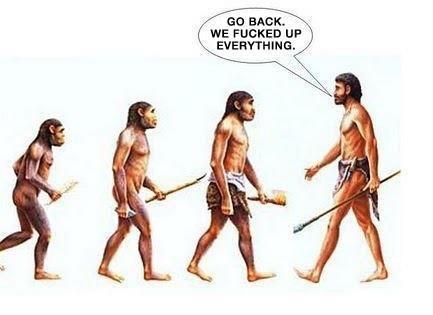
People are social animals. They live in hordes. We like to call that communities. Basically we’re still cave men. That’s how our mind works deep inside. As result, we can look at “Cavemen Sales processes” to understand marketing and communication lessons for today.
Cavemen Speak. Peter Invent Wheel. No one want wheel. Maybe Peter Wheel Sales Pitch not good enough?
Peter tries to sell the wheel to potential customers by putting up a story to convince them. He tries different tactics, tactics that might sound familiar to you:
Benefit Communication: communicate the strengths of the product. And believe people are rational enough to get the benefit. Failed.
Promotional Communication: communicate your product and offer an extra. Believe people are really eager to get the extra that they buy the product. Failed.
Means-End Communication: communicate your product as a means to an end. In traditional TV advertising this is often seen. Failed. Well, I didn’t actually in the episode but it often does in reality.
So, everything fails, huh? Yes. And maybe because the fragment doesn’t show how Cavemen Trade happened. It occurred while surrounding around the fire. Not on an advertising stage.
The snag: Cavemen didn’t have an “advertising stage”. They had a conversational fireplace.
There’s a snag in the above. Cavemen didn’t have an advertising stage. They had a conversational fireplace where all stories within the community resided. Sounds familiar? It should be. Today’s consumer sphere is mostly happening in a conversational fireplace. Yes, Think social media.
To describe characteristics of Back 2 Basics Marketing, one can look at how “Marketing” worked in the age of the cavemen. Let’s dig a little deeper into that.
Cavemen initially had no media except for their own voice. Speech was important. It was the manner to transmit information from one to another. This not rarely occurred in “community gathering” fashion, to know, gathered around a fire.
It was the perfect moment to inform people about specific skills, knowledge and expertise another community-member possessed. The way information was transmitted was mainly through telling stories. Stories are easier to remember, pass through, etc. than e.g. bulleted lists.
Furthermore, discussing one’s “business” ( = something he could provide to the community) in a public forum (the fire) resulted in a strong focus on delivering quality and servicing customers. Successful cavemen entrepreneurs made sure their quality & service was endorsed over and over by customers around the fireplace. Today we call that customer advocacy & ambassadorship.
Finally, because of the above context, there was no single cavemen offering “crap” to the market. Crap couldn’t survive very long. All products and services had value that exceeded the pure financial one. Crappy products, services (and hence brands and enterprises) were put to flames during the community gathering.
 Keen on C