The power of ecosystems? On Google+

Google Plus

Google Plus

Do you still remember the day Google launched Google+? This much awaited and highly anticipated social networking platform was launched about a half a year ago. “Social media gurus” immediately announced the death of Facebook. At that point, I was convinced those people understood the phenomenon wrong. So to put things in perspective, I wrote a blog post called “Why Facebook wins the Social Network Battle. On Flirting, Sex, Porn and Mr Rogers.” As from last week, I believe we entered a new stage in this debate. After all, Google plans to implement an updated version of its search algorithms that will change how the web works. This time it was up to the “SEO gurus” to have their say on Google+.

I don’t know what type of guru I am – I believe none at all – but it felt like time for my take on Google Plus. And let’s start with the hottest topic these days: SEO and Google+.

Google’s announcement on G+ integration

Regardless of the fact that Google Plus looked like “a Facebook” at launch, Google always insisted that it concerned a “project of bigger scale”. How big that scale is became clear with the announcement made by Google at the beginning of January 2012.

Simply stated: Google plans to integrate information from Google Plus to personalize search results. For SEO gurus it was a signal to jump into action. Suddenly SEO drastically changed: it’s no longer about how to get sites ranked high in search results but about having content on Google Plus. This not rarely resulted in advice similar to “you need to be on Google Plus.” As a result, brand pages flourished like mushrooms.

Of course, I cannot have anything against enterprises and brands being on Plus, but I can object the proposed tactic by the gurus. I believe the “New SEO” is more about getting real people post information about a business or brand on Google+. That’s something completely different from merely broadcasting marketing messages through a brand page, no?

However, there’s more at stake than just the impact on search. As one observer cleverly noted: “Google has a lot of other products that contain personally relevant information. Google Docs has documents, Gmail has contacts and calendar entries, Google Music has playlist information, and so on.”

Google as an integrated online collaboration platform. Google+ as social layer.

Google as an integrated online collaboration platform. Google+ as social layer.

Google+: social layer on top of collaborative cloud ecosystem by Google

Have you ever looked at Google’s navigation bar in detail? You should. I believe it’s not a coincidence that Google Plus is integrated into this bar. Google Plus is a part of a wider ecosystem. That ecosystem is neatly designed through a navigation bar. It contains multiple collaborative cloud solutions, amongst:

Google's collaborative cloud solutions as an ecosystem

Google's collaborative cloud solutions as an ecosystem

  • Gmail
  • Docs
  • Translate
  • Calendar
  • Search

I have a feeling this ecosystem will pay off. Not in the way that it’ll outperform Facebook or whatever other social network but in an unprecedented position within the organizations of the future it might take.

The organization of the future: fluid networks of interconnected freelance workers

Based upon a study by SD Worx on “the Future of Work”, I’ve deducted 3 core principles about the organization of the future:

  • Organization based upon strength individuals
  • Individuals work autonomous
  • Collaboration between individual people is more than the sum of all individual co-workers

The above means that organizations will form themselves organically between engaged people who connect. This connection can occur online and offline. However, as the strength of the individual becomes key to an organization, they’ll look for the best individuals. During this search process they won’t take geographic borders into account. In order for those talented people to collaborate effectively in a remote manner, they need collaborative tools that are available 24/7. And what exactly is available 24/7? Right: the worldwide web.

There we are: the Google web tools listed above are a great solution for future organizations. A lot of people will work through the Google Docs platform, use Gmail, translate through Google Translate, etc. Added to that is a tool that allows you to easily message, share, video call,…: Google Plus.
What else do you need to effectively execute your job as a knowledge worker? Almost nothing?

Google Plus a social layer for the future enterprise, not a Facebook killer.

Do you see the power of ecosystems at work?
Do you know other products designed with an ecosystem in mind apart from Apple’s app store?

Web as Service Platform. Marketing with an SD-logic?

stuck in the spider's web by looking at the web as a marcomm channel.

stuck in the spider's web by looking at the web as a marcomm channel.

Social media: marketing’s new wonder channel?

I often hear and read marketers about the opportunities brought along by social media. Now, I don’t want to dismiss these opportunities. Those are certainly there. The type of opportunities however are often misunderstood by marketers. They tend to see this as nothing more than a new marketing and communication channel. Consequently, social platforms are tools to push messages towards potential customers. Of course, social can be used for the purpose of lead generation or just mind-blowing advertising, but it won’t bring the benefits expected by marketers. My point here is that the ‘Web’ and the ‘social web’ in particular ought to be looked at from a Service-Design logic instead of a Good-Design logic. I believe it will help marketers realize there goals by deploying the web and social platforms in the correct manner.

SD-logic versus GD-logic: basic principle

In the industrial age, the dominant logic about economic exchange was based on the exchange of “goods”. As a result, a GD-logic focuses on tangible resources, added value and (monetary) transactions. Over time however new perspectives emerged. Those new visions look at intangible resources, co-created value and relationships. This new perspective is commonly known as a SD-logic or service design. I believe that marketing should start thinking from this perspective. A perspective in which service provision is fundamental to economic exchange rather than goods.

Marketing logic: SD-logic versus GD-logic

A GD marketing logic limits marketers in creativity for seeing opportunities in value co-creation with customers and other stakeholders. What’s more, this focus on transactional exchange ignores aspects like customer loyalty and puts constraints on developing the lifetime value of the customer for the company at stake. The S-D logic on the other hand broadens the logic of exchange – both socially and economically.

Web as Service Platform

Web as Service Platform

The Web and The Social Web from an SD-Logic

The internet and the web are well-known and mostly deployed as a mean to share information. Or: the web is seen as just another marketing communication channel.

That’s actually a pity because the web also brings along loads of opportunities for process optimization. And process optimization is often about service design thinking, which I believe is at the core about ‘servicing a.k.a. making things easier’.

Improving a business process is making things easier. And what’s more, it often means that you build strategic competitive advantages – as you’re able to get the same (better) result at lower costs.

To overcome overlooking the options when developing a digital-enabled enterprise and/or marketing strategy, one better investigates and lists down the options for process integration.

Who’s in for an exercise on process optimization through the web and the social web?

The future CIO is not an engineer.

World has changed, IT should change.

World has changed, IT should change.

I believe the world has changed, forever.
CIO and IT leaders need to re-align to this change so to further prove their value in the future.
As a result the IT department is increasingly attracting business profiles who serve as an intermediary between information technology and business processes.
Next to that, the rise of social media and the so-called consumerization of IT spurs new communication across business units, resulting in a ‘flat’ organization. It’s exactly here that IT can prove its value.
The CIO needs to be a true leader. He must think strategically and have impact on the company’s decisions. To fully realize this, IT must look for the human side again – both in the IT organization itself and in the IT systems. Hence our bold statement “the future CIO is not an engineer”.

Change because IT changed

Until recently IT innovation merely took place within the business spheres. Nowadays, we witness the opposite: IT innovation moved into consumer domain. One can firmly state that companies like Apple and Google develop smart services and devices for the consumer first.

It should not come as a surprise that those services and devices are increasingly entering the corporate world. What’s even more: the new generation of knowledge workers is expecting the same ease in their professional spheres. Unfortunately many companies aren’t deploying similar tools. In my view they aren’t doing it because of their attitude. They believe bringing in those solutions isn’t very secure. This attitude needs to change.

From personal to personalized computing

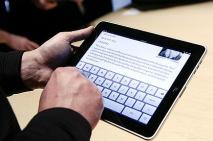
We could describe loads of technological innovation that contributed to this shift (multi-core processors, lithium-ion batteries, development in “flash memories”, …) but the most important aspect is that it transformed the way many people experience computing. The PC may have been personal, a smartphone or tablet is almost intimate and you can take it almost anywhere. The PC is indeed personal but nowhere near as customizable as the smartphone or tablet. The way Apple marketed these devices has only enforced the notion of technology as something personal.

Cloud computing to drive mobile computing

Cloud Computing

Cloud Computing

For much of the personal-computing era, the content that people needed for work or entertainment had to be stored on the PC’s hard disks or on external hard drives and corporate servers. Today data and content more and more reside in the “Cloud”: large server infrastructures, often run by Google or Amazon, where huge amounts of data are stored for retrieval from almost anywhere in the world.

The rise of the cloud has also created an explosion of other consumer-focussed web services. These include big social networks such as Facebook and FourSquare. These services enforce the use of cloud instead of hard disk drive.

Other small companies are also placing powerful tech tools in people’s hands. Dropbox (or the Belgian equivalent of Filip Tack, Nomadesk) lets users upload assets via an easy-to-use interface and then retrieve them from many different devices.

The app way of life

Mobile computing relies heavily on apps. But apps are nothing more than chunks of software that get things done. However, the impact cannot be underestimated. It turned people into creatures who do not longer want to wait upon a PC hard disk that reacts to the request. Apps are simple, cheap and give instant gratification. Something that’s not that easy on PC, especially when dealing with legacy software solutions within corporate environments.

Personal Technology at Work

We are about to see a new generation (Gen Y) entering the work space. You’re about to recruit from a generation whose expectations of technology have been profoundly shaped by Facebook, mobile apps and other innovations (like cloud storage). But do not understand this wrongly. It’s not only the new generation of digital natives who are horrified by the corporate IT systems. The rapid spread of tablets and smartphones, and the attraction of social networks and other online tools such as Twitter, mean that people of all ages have grown accustomed to having powerful yet easy-to-use technologies at their fingertips. Many of them want the same stuff at work too.

But that’s not everything. There’s a change in society as well. The change of gradually blurring lines between private and business lives, which means that people rely on technology much more to allow them to work or play anywhere at any time.

Personal Technology at Work

Personal Technology at Work

Do not underestimate the impact of personal technologies at work

Studies point out that a lot of IT departments underestimate how much employees are using their own technology, including social networks and other web services for work. Internal tech teams are often accused of falsely using the “security” concern to justify tight control about which devices workers may and may not use.

CIO and IT need re-alignment

Historically many IT departments have treated people as tech stupid who should do what they are told by the engineers. Now however IT departments are facing a challenge to their authority. Much of what workers are demanding is the right to use their own smartphones and tablets for work, to mix business and personal data on them and to personalize them with their own apps. This frankly is the anathema to IT departments running digital dictatorship.

Rather than a few geeky people bringing in technology, today it’s a full army of employees. Left undetected, their DIY efforts could cause sensitive corporate data to leak and open digital doors to hackers. However, this treat seems exaggerated. Verizon published a study in 2010 that concluded that most of the corporate data breaches were due to direct attacks on corporate servers, not to mobile devices.

The best policy for CIO’s is consequently allowing these devices but to make sure there’s reasonable security on it. Pretending it’s not there would be really stupid.

The new role of CIO and IT department?

Not so long ago many internal tech teams focused on installing gigantic software systems to handle business processes like accounting or human resources. Most of these are now in place, though they require maintenance. This means IT now has more time to be a partner supporting business divisions. Enabling workers to use the gadgets that they consider best for their job is part of this strategic realignment. Wise companies are not just embracing the consumerization of IT. They are also turning innovations from personal technology to their advantage.

The CIO needs to be a true leader. He must think strategically and have impact on the company’s decisions. To fully realize this, IT must look for the human side again – both in the IT organization itself and in the IT systems. Hence our bold statement “the future CIO is not an engineer”.