Why you better Cut the Crap: Service is the Old & New Gold.

Service is the new gold.

Service is the new gold. (credits: boomerang cards).

I agree. It’s been way too long since I pressed down another story here. Not without a reason though. I’ve been crazy busy visiting companies from about eight industries to perform in-depth interviews about their business and their future. It has been a wonderful experience so far. And it shouldn’t come as a surprise that I generated tons of insights from this qualitative market research period. I want to share my main insight today:
“Cut the crap and stop pushing it on to people. Be real, bring value, show respect and be helpful to every customer. In brief: stop screaming, start whispering.”

Service is the Old and New Gold.

Loads of consumers became disappointed in companies, products and services. As a result, corporations and organizations are sometimes seen as “evil”. I believe this is the result of what I call “the old marketing”. Most brands and organizations still rely on 20th century marketing principles: manufacture something against the lowest cost possible and consequently pay much money for advertising to create a positive image so that consumers buy your product. The only thing that matters is short-term profit, not a long-term sustainable contribution to society. I’ve always revolted against these types of companies. They are indeed “no good”. They don’t contribute to a positive society and consequently a better world. They do not “serve” their customers through good products, honest communication and real value.

Service is Gold.

Service is Gold.

That marketing-enforced image however has always been put in perspective by the customers themselves by sharing their experiences: word of mouth. And what’s even more, word of mouth has always been the most trusted source of product or service information. Unfortunately it had little to no big scale leverage so that “evil” corporations could live happily ever after. So, if one customer was dissatisfied by the service he told it to about 20 people and didn’t rely on the company in the future any more. But for the company, that was not really a problem. The customers that decided to leave were replaced by new customers who bought the marketing story.

I truly believe (and hope) the days of “high churn because we produce crap is solved by acquisition campaigns” are over as social peer-to-peer technologies became mainstream and leverage Word of Mouth on a huge scale.

What is Service? Think long-term reputation vs. short-term profit.

If one states that service is key, he needs to define what exactly is service. Based on my interviews, I’d say service is about small things, but things that can make someone’s day and stick in their memory. It’s about going the extra mile, about doing something you actually didn’t have to do. It’s about the goal to serve in order the make life (or businesses) easier and better. It’s the social aspect, it’s the human touch. It’s not about social media. Those only give large-scale opportunities to foster on this service behavior.

Research details

As stated above and in the introduction, the above isn’t just a gut feeling. It’s inspired by real-life (analog) talks with leading people within several industries. Below is a small overview of my data sample. Please allow me to just recycle one of the original research presentation slides. It’s important to realize that within this sample some of the companies were active on social media – which was the drive to act more service-wise – and others who were completely inactive on social but have always put the customer in the center of its existence.
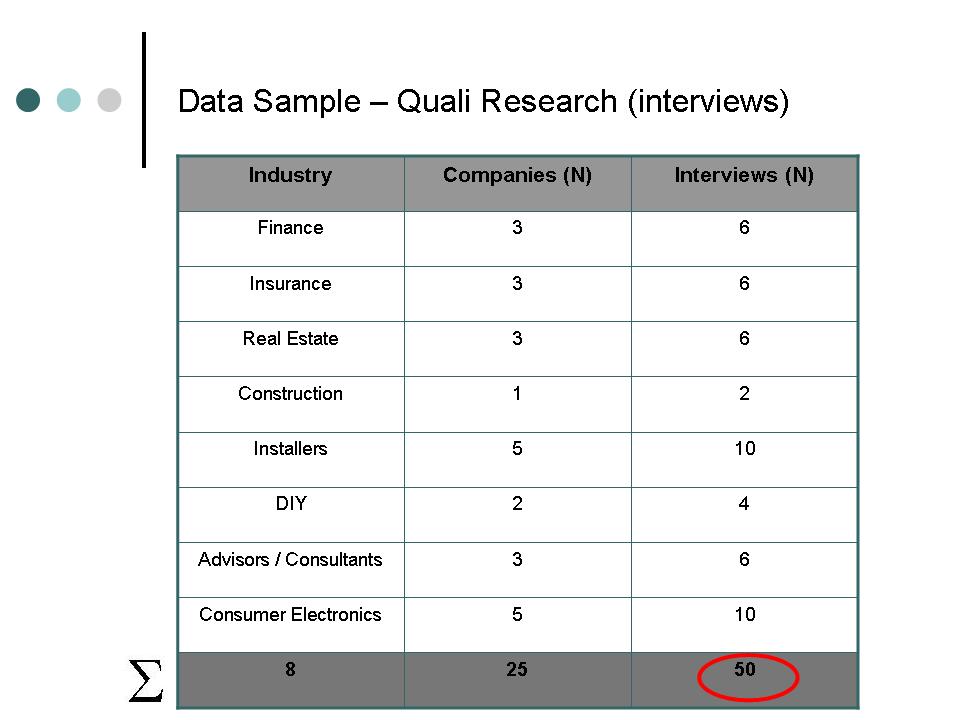
Quali Research Data Sample

Quali Research Data Sample

Sports & Business. Not that stupid after all?

Tactics Board from sports apllied to the world of business

Tactics Board from sports apllied to the world of business

A category of this blog bears the label “sports”. The articles within this section always link sports with business.
The posts aim to simplify more complicated business stuff by giving examples from the world of sports. In addition it strives to learn lessons from sports and apply them in a business kind of sphere.

Up until now, the sports category has 6 posts. The reason for that is that I always wondered whether this specific endeavour made any sense at all. Or as my last post finished :

Can businesses learn something from sport? Or is sport just sport?

I believe we can transfer insights from one societal aspect to another. Below are two cases from other people that back up this point. The question remains ‘why’ however.

Sport is not just sport. Content Marketing Strategy is like football.

Below is a free translation of a sports analogy used by: @steven_insites in a Dutch Marketing Magazine so to explain content marketing.

It’s like Football.

Developing a content conversion strategy is similar to putting together a football team. And it’s all about scoring in football. But in order to score the team must get the ball to the striker. Some teams use long passes to get there, others carefully advance through short passes. But in the end the ball needs to cross the line.

The marketer is the coach, the team composer. It’s up to him to decide how to get the ball crossing the line. But anyway, don’t expect to win without a proper strategy.

Sport is not just sport. The Jeremy Lin example.

Learnings from Jeremy Lin

Learnings from Jeremy Lin

Another case demonstrating that learnings from sports can be transferred to business is the story of Jeremy Lin. This case deals with basketball, underdog positions and the power of social media.

During last week Jeremy Lin became a sensation. The New York Knicks guard became a sensation first on new media platforms such as Twitter and Facebook but soon enough captured the attention of traditional media as well.

The Knicks guard is in tremendous shape and does crazy stuff on the court. Even that crazy it led to the neologism “linsational” or “linsanity”. This remarkable story detailed in the N.Y. Times shows us the power of bottom-up marketing for underdog players.

In this particular case people were surprised because they didn’t know Jeremy before. There are not that many Harvard players, not that many Asian-Americans. He’s an underdog. But he works hard and it pays off today.

So where’s the lesson for business?
SMEs and underdog players can turn their position into an advantage by offering great products (Jeremy plays incredible) and let that spread from within the fan network (Twitter, Facebook) towards the public sphere (traditional media, such as N.Y. Times). And yes, this includes working really really hard.

Why can we learn something from a completely different sphere?

I believe it’s proven we can learn a thing from an entirely different phenomenon. But why?
Is it because all are just aspects of the same society?

Daum fired at FC Bruges? On Strategy, Leadership and Branding.

Leadership Daum Style at FC Bruges

Leadership Daum Style at FC Bruges

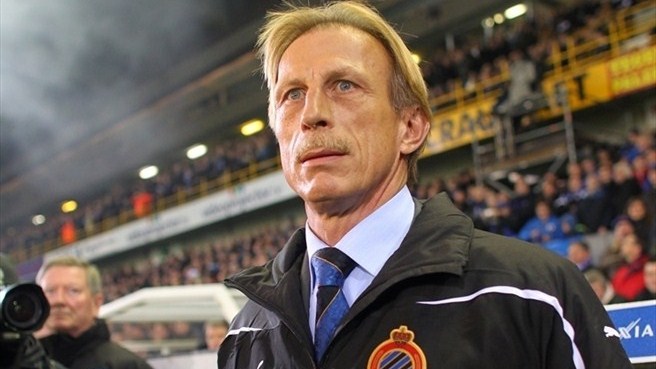
I am sorry if I just tricked you into a fake news item. Cristoph Daum is still the coach of FC Bruges. The headline is reasonable though, looking at the latest results of historically one of Belgium’s best football clubs. Added to that is the “culture of coach swapping”. The logic it dictates is somewhat of the following: if we don’t perform well, fire the coach and bring in a new leader. And it’s exactly from that swop culture that we can learn a thing or two about strategy, leadership and branding. The main message for today:

FC Bruges’ Coach Swap Story demonstrates how Strategy and Leadership drastically impact Branding.

There are many ways to develop a strategy to obtain goals. Within this process, the vision of the leader is rather critical. After all, his or her vision guides the decision for a specific strategy.
I believe this choice instantly impacts the “style”, “soul”, “positioning” or “brand”.

Let’s try to make this more clear by visualizing the case of football.

Strategy, leadership and branding. Learnings from football

Strategy, leadership and branding. Learnings from football

FC Bruges Coach Swap Story

Looking at the above scheme, something is remarkably striking in the FC Bruges Story. Let me just do the telling, meanwhile you do the scheme-mapping exercise, ok?

Adrie Koster, formal coach of FC Bruges. Dutch guy.

Adrie Koster, formal coach of FC Bruges. Dutch guy.

As from 2009, the Dutchman Adrie Koster, coached the team. As a leader he defined the strategy to obtain goals from an “always win perspective”. As a result FC Bruges played attacking, creative football and scored a lot. Neutral spectators loved the team. It had style, soul. It was a good brand. But the team didn’t always win. And after four successive defeats, the club fired the coach. He did not reach the objectives. The “always win strategy” was left. It didn’t work. A new strategy and leader was sought for.

At the end of 2011 FC Bruges appointed a new leader: Cristoph Daum. A German coach with a solid track-record. His goals were the same as those from Koster. But in order to fulfill them, the leader envisioned another approach to realize the objectives. He took the “win more than others do perspective”. Consequently, the same group of people were no longer recognizable. The team played uninspired and relied on proven tactics like dropping high balls in the penalty zone, free kicks and corners. It resulted in a lot of “1-0 wins” for the team however. And in fact, 1-0 quickly got labeled a “Daum Score”. But the longer this leader is in charge and brings the strategy to live through not really sexy tactics, the less the team is liked be outsiders and fans because of its style. The brand isn’t perceived as something “good” anymore. The soul is gone. This story from the world of sports clearly shows that strategy and leadership influence branding.

What if Daum really got fired?

Well, let’s answer the question by applying the theoretical scheme applied above.

FC Bruges Coach Swap Story. On Strategy, Leadership and Branding.

FC Bruges Coach Swap Story. On Strategy, Leadership and Branding.

Can businesses learn something from this story on Strategy, Leadership and Branding?
Or is sports just sports?