Marketing Trend 2014 (& way beyond): Back 2 Basics.

It’s that time of the year again. End of year is always a good time to look back. But more importantly, it’s a moment to look ahead. That’s what most of the trend reports do. They predict what’s going to “trend” in the upcoming year. And that’s exactly my biggest issue with trend reports.

Trends are not limited to a small time span of one year. So basically, all trend reports are talking about what’s going to “hype” in the upcoming year. That’s a shame. Because a hype is not structural. A hype is not significant. A hype can project a wrong image. It can be torn apart from the deeper parameters that are the rationale behind a trend. And yeah, marketers just love jumping onto hypes – for better or for worse.

Back to Basics Marketing: 2014 – 2020

I’m not willing to look cocky here but since a couple of years now, one can notice marketers who drastically alter the way they think, see and do marketing. What’s more important, they’re being successful while doing so. It’s my personal believe – and hope, if I may be that naïve – that as from 2014 this way of thinking, seeing and executing marketing will become dominant.

Back to Basics Marketing has an in-depth rooted hate towards the artificial distinction of Digital Marketing vs Analog Marketing. It doesn’t really matter what media holds the content. The medium is not the message. Marshall McLuhan was wrong. Oh wait, he was right when he coincided the phrase. Today’s media evolutions prove that he’s wrong.

Back 2 Basics Marketing

In practice, back to basics comes down to the fact that “content marketing” is “media agnostic” – it can be online, social, print or face-2-face. The real question is who your target community is and what’s the best way to reach out to them. There’s e.g. less clutter in print marketing today. It means an opportunity for your business to get noticed. Is going back to “older, traditional” marketing matter the true meaning of “back 2 basics marketing”? No it’s not.

Back 2 Basics Marketing is not so much about going back to adult media

Back 2 Basics Marketing goes way back in time. Back 2 Basics Marketing deploys the tactics that were valid in the age of the cavemen. Those are still very powerful today because we all still have cavemen brains.

Throughout mankind’s evolution and consequently the evolution of communication media, marketing altered those tactics in favor of quick wins though. But as evolution continues, those quick wins disappear. The very essence becomes more important.
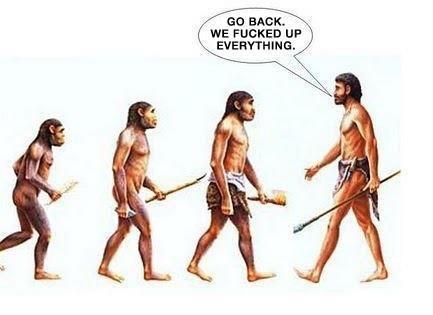
Back 2 Basics Marketing

Back 2 Basics Marketing

The essence of Back 2 Basics Marketing

To describe characteristics of Back 2 Basics Marketing, one can look at how “Marketing” worked in the age of the cavemen. Let’s dig a little deeper into that.

Cavemen initially had no media except for their own voice. Speech was important. It was the manner to transmit information from one to another. This not rarely occurred in “community gathering” fashion, to know, gathered around a fire.

It was the perfect moment to inform people about specific skills, knowledge and expertise another community-member possessed. The way information was transmitted was mainly through telling stories. Stories are easier to remember, pass through, etc. than e.g. bulleted lists.

Furthermore, discussing one’s “business” ( = something he could provide to the community) in a public forum (the fire) resulted in a strong focus on delivering quality and servicing customers. Successful cavemen entrepreneurs made sure their quality & service was endorsed over and over again by customers around the fireplace. Today we call that customer advocacy & ambassadorship.

Finally, because of the above context, there was no single cavemen offering “crap” to the market. Crap couldn’t survive very long. All products and services had value that exceeded the pure financial one. Crappy products, services (and hence brands and enterprises) were put to flames during the community gathering.
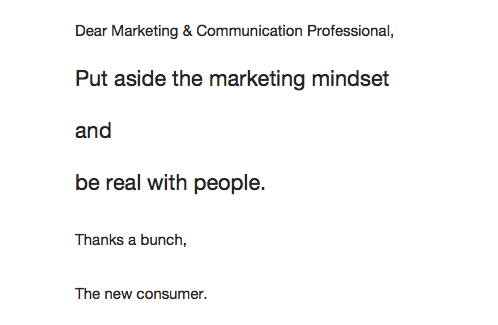
Open letter to the marketing & communication professional.

open letter marketing & communication pro

open letter marketing & communication pro

Read the entire open letter here.

Beyond employer branding. People are the brand.

Did you ever took time to investigate the right column of this blog? It has some widgets. And one of them suggests that I’m a member of Stima, more particularly a member of the expert group internal branding / employer branding. Regardless of the fact that I’m lucky to participate in the group, I feel like making some specific remarks about employer branding and branding in general. In my humble view employer branding is branding. Brands are people offering a product or a service. Bottom line? What we call employer branding today is in fact genuine branding as marketers always intended it. Employer branding is the future. But the future is now.

Branding

Branding

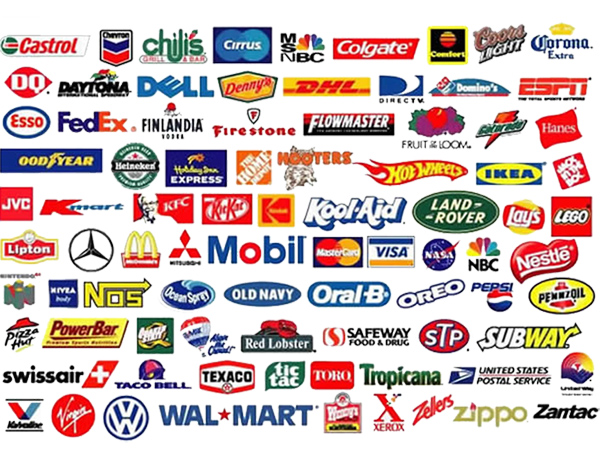
Branding: a logo, some colours and …

Have a look at the adjacent image and ask yourself the question what exactly is it that makes or breaks a brand?
Is it a logo with some colours?
Is a corporate identity or brand identity merely a design aspect?
Do corporate identity and corporate design merely indicate the same thing?
Or is their something more at stake?

I believe there’s something more to tell about it. To start with, let’s have a look at what exactly is employer branding.

What is employer branding?

Just as you have a brand position within consumer’s mind, there’s a brand position within the minds of employees and potential co-workers. Employer branding is branding like corporate branding. It’s more than advertisement, recruitment and retention. Employer Branding is a mindset. It’s the development of a culture. It’s about making choices and communicating them consistently.

Employer branding management however – and this is the big clue – is all about the interaction of the external employer brand and the internal job preview. Employer branding is the result of the value proposition and the employee experience. It’s about managing expectations. Exceed employee expectations, make them feel proud and encourage them to share that happiness with the world. Result? The external brand as created by marketing communication claims is reshaped.

Employer branding, positive conversations and the external brand

The goal is to manage your people in such a way that employees become engaged and proud, resulting in positive online conversations about their job and brand. Those conversations are consequently picked up by potential co-workers who are eager to work for such a great company. On the other hand, current employees are happy to stay in this amazing tribe / community. But next to that, it drastically impacts the external brand.

How employer branding impacts external branding?

A brand isn’t build in a day. So it must be something more than a logo and/or colours associated to a name. Branding is not something companies and brands fully control. The brand is in fact an association of elements in the heads of the consumers. You can’t control their brain and their thinking (you could do that more easily in the past).

The brand as such is constituted along all interactions occurring with the brand on several touch-points. One of today’s hottest touch-points are the so-called social media. And it’s exactly through those social media outlets that employees co-create the external brand identity. As a result, employer branding becomes increasingly important for the shaping the brand soul.

What’s even more, your corporate brand is your employer brand in the long run. Just think about the transparent, open world we’re living in. Add to that the inflow of Gen Y profiles into companies, and you’re there.

Companies with a negative culture are immediately picked up through e.g. social media expressions by current employees, customers, etc.. This heavily defines brand perception. You better make sure that this “employer brand” or culture matches the external brand created by marketing communication.

Business silos collapsing

Business silos collapsing

Bye Silos. HR & Marketing collaboration.

Sure, employer branding is pretty close to the HR domain. But employer branding looks at HR as Human Relations, not as Human Resources. Yes, the most important word in HR is Human, not resources. Let’s bring back human in business. The social tools are already there. And yes again, the most important word in social media is social, not media.

Overlooking all the above, it’s clear that we should integrate the external (corporate) brand with the internal (employer) brand. Bye silos. HR and Marketing have to collaborate to reach higher mutual goals.